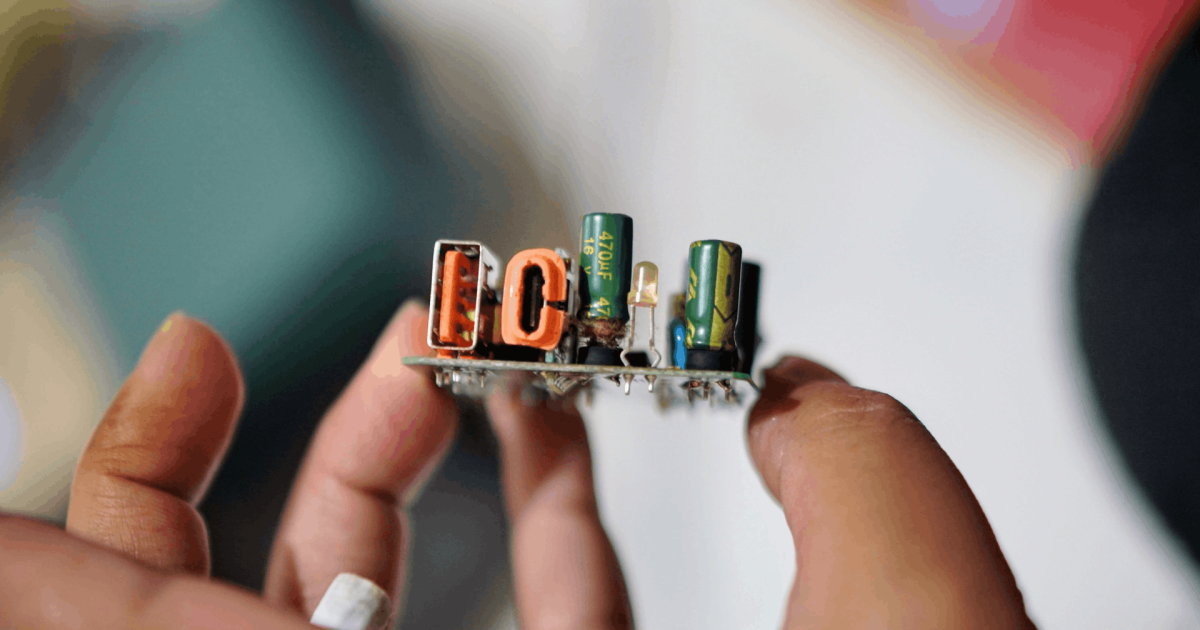


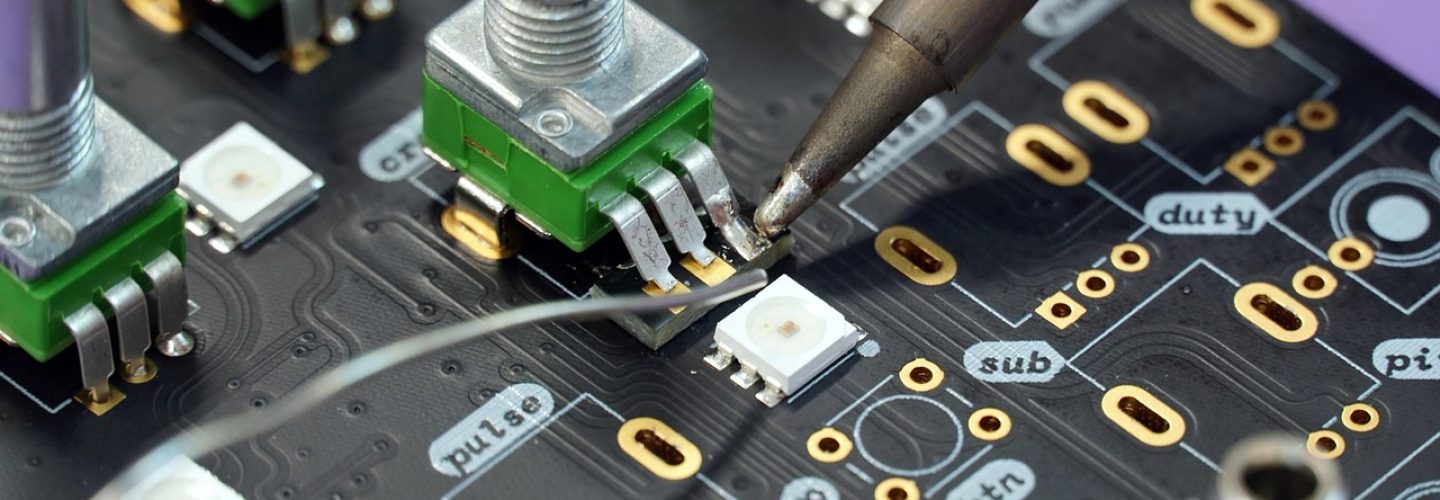
Mixed technology PCB assembly combines surface-mount technology (SMT) and plated through-hole (PTH) components on the same board. It is justified when a design genuinely requires the mechanical strength, electrical characteristics, or component availability that PTH provides, and where SMT alone cannot meet those requirements. The added process steps, including multiple reflow passes, wave soldering, or selective soldering, carry real cost and scheduling implications. The decision should be driven by functional necessity, not default practice.
TL;DR
- Mixed technology assembly is not inherently more expensive than SMT-only builds; it depends on volume, board complexity, and how well the process sequence is planned.
- PTH components remain essential for high-current connectors, transformers, and through-board mechanical anchoring where SMT cannot provide adequate retention.
- The selective soldering process is often the most controllable option for mixed boards with heat-sensitive SMT components already populated on the reverse side.
- DFM decisions made early, particularly component placement, thermal zoning, and pad geometry, determine whether a mixed board runs efficiently or becomes a rework trap.
- The business case for mixed technology assembly rests on whether the cost of adding PTH is less than the cost of re-engineering around it.
About the Author: Season Group is a design and manufacturing partner with 50+ years of experience in electronics manufacturing since 1975, supporting OEMs across industrial, power, automotive, and access security sectors through integrated DFM and production services.
What is mixed technology PCB assembly, and how does the process actually work?
Rather than treating mixed technology as a default assembly choice, the starting point is understanding what the process actually demands and where it introduces complexity. Mixed technology PCB assembly places both SMT and PTH components on a single PCB, processed through a defined sequence of soldering stages [mpe-electronics.co.uk]. The standard flow typically runs: SMT paste print and reflow on the primary side, board flip, SMT adhesive and reflow (or wave soldering) on the secondary side, then PTH insertion and soldering via wave or selective soldering.
The critical variable is sequence. Every additional thermal cycle introduces cumulative stress on already-soldered joints, so the order of operations matters as much as the individual process parameters [allpcb.com]. Boards with high component density on both sides, combined with PTH parts clustered near SMT components, create the most process risk and require the tightest thermal profiling.
When does the functional case for PTH actually outweigh the process overhead?
Building on the process sequence above, the harder question is not how mixed technology works, but when it is genuinely worth running. PTH remains the correct choice in specific, well-defined scenarios [protoexpress.com]:
- High-current or high-voltage connectors where the solder joint must carry sustained load and SMT pad adhesion is insufficient for the current path.
- Large magnetics such as transformers and inductors where mass, heat dissipation requirements, and vibration loads exceed what surface-mount pads can reliably hold.
- Mechanical anchoring points including edge connectors, D-sub connectors, and board-to-board headers that experience repeated insertion cycles.
- Legacy component availability where a critical part is only available in a through-hole package, and re-engineering around it would cost more than running the PTH process [poe-pcba.com].
In each case, the PTH component is not there by preference. It is there because the SMT alternative either does not exist, does not perform adequately, or requalification would require test cycles and timelines that are not practical.
What are the specific process risks in mixed technology builds, and how are they managed?
A related but distinct concern from the functional justification is the process risk introduced by combining both technologies. The primary risks are [pcbsync.com]:
| Risk | Root Cause | Mitigation |
|---|---|---|
| Thermal damage to SMT components during wave soldering | Bottom-side SMT components exposed to solder bath | Use selective soldering process or SMT adhesive and controlled preheat |
| Solder bridging on fine-pitch SMT near PTH zones | Flux activation and solder flow interaction | Define exclusion zones in board layout; adjust wave parameters |
| Incomplete PTH hole fill | Incorrect hole-to-lead ratio or insufficient flux penetration | Follow IPC-A-610 pad and annular ring guidelines |
| Warpage on large boards | Multiple reflow cycles and asymmetric copper distribution | Panelisation strategy; review copper balance in DFM stage |
| Rework access conflicts | SMT components blocking PTH leads on the reverse side | Plan component placement with rework clearances at design stage |
The selective soldering process addresses several of these risks by targeting solder delivery only to PTH joints, leaving adjacent SMT components untouched. It is slower than wave soldering and requires programming time per board variant, but for low-to-medium volume builds with dense mixed layouts, it typically produces better first-pass yields and reduces rework [acceleratedassemblies.com].
How should DFM be approached for mixed technology boards?
Stepping back from the process-level risks, the upstream design decisions are where the cost trajectory of a mixed technology build is actually set. DFM for mixed boards covers several distinct areas [pcbsync.com]:
Component placement rules:
- Group PTH components on one side of the board where possible to simplify the soldering sequence.
- Maintain clearance between PTH solder tails and adjacent SMT pads to prevent solder bridging during wave or selective passes.
- Avoid placing SMT components within the wave soldering shadow of tall PTH parts.
Thermal design considerations:
- Identify heat-sensitive SMT components before committing to a wave soldering process; these may mandate a switch to selective soldering.
- Specify thermal reliefs on PTH pads connected to large copper planes to ensure complete hole fill.
Pad and hole geometry:
- PTH hole diameter should be 0.25mm to 0.4mm larger than lead diameter to allow adequate solder wicking [rushpcb.com].
- Annular ring dimensions must account for drill tolerance and IPC Class 2 or Class 3 requirements depending on end-use environment.
DFT and inspection planning:
- Mixed boards require test point accessibility for in-circuit test (ICT) that is sometimes constrained by component density from both SMT and PTH populations.
- X-ray inspection is more complex on mixed boards due to overlapping component shadows; plan board stackup and component orientation accordingly.
Running DFMA, DFT, and DFX analysis before the board is released to production is the most effective way to prevent the process risks described above from becoming production problems [nextpcb.com].
When does the cost calculation actually favour mixed technology?
Now that the operational picture is clear, the financial layer matters. Mixed technology assembly carries higher unit cost than SMT-only due to additional process steps, longer cycle times, and more complex test coverage [nextpcb.com]. However, that comparison is incomplete without accounting for:
- Re-engineering cost to eliminate PTH components from a design that was not originally laid out for SMT alternatives.
- Component availability risk if the SMT equivalent of a critical PTH part is single-sourced or has longer lead times.
- Qualification cost if switching from PTH to SMT for a connector or transformer class requires new mechanical or electrical testing.
- Volume sensitivity: at lower volumes, the per-unit overhead of mixed technology is proportionally higher; at higher volumes, the process amortises more effectively.
The honest answer is that mixed technology assembly is cost-effective when the alternative requires more engineering work, higher component cost, or requalification cycles than the PTH process overhead itself.
How does Season Group approach mixed technology production?
Mixed technology assembly decisions involve enough interacting variables, process sequencing, DFM constraints, component availability, and cost trade-offs, that they benefit from being worked through with a partner who has run these builds across different volume bands and end-use environments. As a design and manufacturing partner with production sites in China, Malaysia, Mexico, and the UK, Season Group brings that cross-program experience into the DFM and NPI stages, where the decisions that determine yield and cost are actually made.
The integrated DFM approach means that mixed technology decisions are reviewed at the design stage, not after a board has been released to production. For programs where the selective soldering process is the right fit, or where wave soldering parameters need to be balanced against SMT component placement, those trade-offs are worked through during NPI before they become yield problems.
Frequently Asked Questions
What is the main difference between SMT and PTH in mixed technology assembly?
SMT places components on the surface of the PCB and solders them through reflow. PTH inserts component leads through drilled holes and solders them from the opposite side via wave or selective soldering [poe-pcba.com]. Mixed technology uses both on the same board.
Is the selective soldering process always better than wave soldering for mixed boards?
Not always. Wave soldering is faster and more cost-effective at high volumes with simpler board layouts. Selective soldering is better suited to boards with heat-sensitive SMT components on the secondary side or complex mixed layouts where wave soldering would create bridging or thermal damage risks [acceleratedassemblies.com].
How many reflow cycles can a PCB typically tolerate?
This depends on the board material, component ratings, and solder alloy. Most standard FR4 boards and leaded or lead-free solder processes are qualified for a defined number of thermal cycles by the component manufacturer. Exceeding those limits without validation introduces reliability risk.
What IPC standard governs solder joint quality in mixed technology assembly?
IPC-A-610 is the primary acceptability standard for electronic assemblies, covering both SMT and PTH solder joint criteria. Class 2 applies to most industrial electronics builds; Class 3 applies to builds where the end-use environment places sustained stress on solder joints and stricter acceptance criteria are warranted.
When should DFM for mixed technology start?
As early as schematic review and component selection. Decisions about connector type, package format, and component placement made at the schematic stage have the largest influence on process complexity and cost in production [pcbsync.com].
Can all PTH components be replaced with SMT equivalents?
Many can, but not all. Large transformers, high-current power connectors, and some legacy components either have no SMT equivalent or have SMT versions that do not match the mechanical or electrical performance of the PTH original [protoexpress.com].
What is the typical yield impact of mixed technology versus SMT-only builds?
Mixed technology builds generally require more process steps and therefore more opportunities for defect introduction. Well-designed boards with proper DFM, correct pad geometry, and appropriate soldering process selection can achieve comparable first-pass yields to SMT-only builds, but it requires tighter process control and more upfront engineering work [allpcb.com].
About Season Group
Season Group is a design and manufacturing partner with 50+ years of experience in electronics manufacturing since 1975. Operating across a multi-site manufacturing network in China, Malaysia, Mexico, and the UK, the company provides integrated DFM, PCBA, full box build, and supply chain management services for OEMs in the industrial, power, automotive, and access security sectors. Season Group’s production capabilities include automated SMT and PTH assembly lines, the selective soldering process, conformal coating, and full test coverage including AOI, X-ray, ICT, and functional test. The design-led manufacturing model means that process decisions for mixed technology builds are addressed during NPI, reducing downstream yield risk and rework cost.
If you are working through a mixed technology assembly decision and want to pressure-test the process approach or DFM strategy before committing to production, visit https://www.seasongroup.com or email inquiry@seasongroup.com to talk through your requirements with our team.