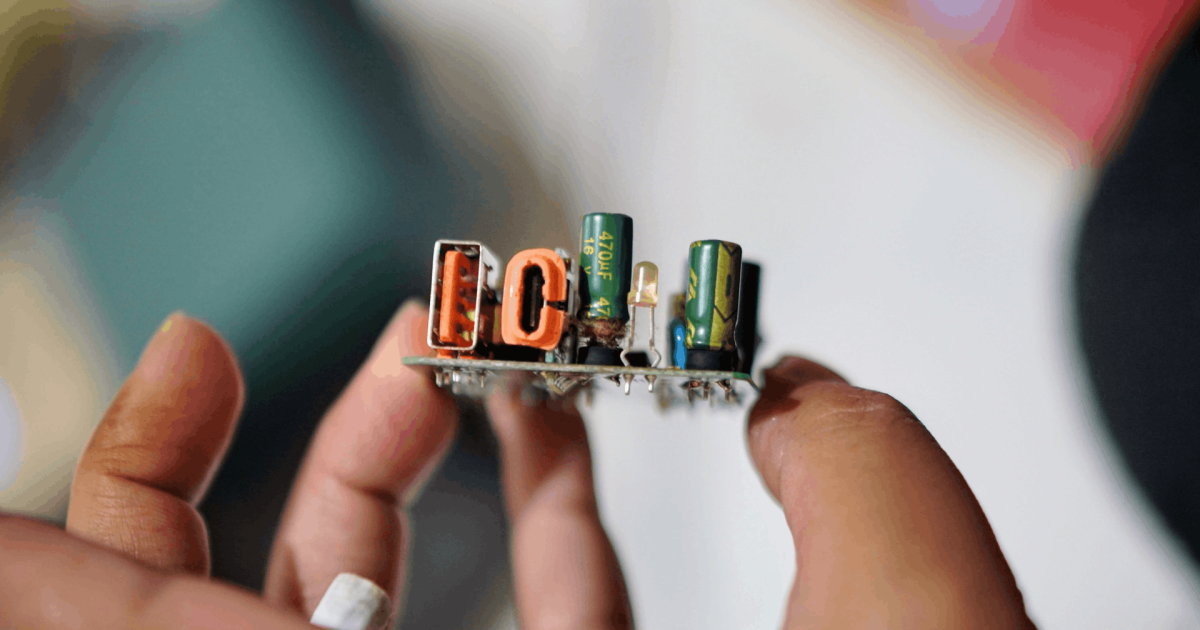



Outsourcing box build assembly for the first time is rarely as straightforward as it looks on paper. For UK industrial hardware brands, the gap between handing over a bill of materials and receiving a production-ready unit is where most problems originate. The core issue is not finding a capable contract electronics manufacturing UK supplier; it is knowing what to ask for, what to specify, and what assumptions will cost you later. This article addresses the structural mistakes that appear repeatedly when industrial OEMs approach box build outsourcing without a clear framework.
TL;DR
- Box build scope is almost always under-specified at contract stage, leading to cost overruns and rework [geospace.com]
- Treating box build as a purchasing decision rather than an engineering handoff delays production and inflates risk [encata.net]
- DFX work done before supplier engagement directly determines yield, test coverage, and assembly cost
- Supplier selection criteria for box build differ meaningfully from PCBA-only contracts
- The right outsourcing model depends on your internal engineering capacity, not just your volume
About the Author: Season Group is a design and manufacturing partner with 50+ years of electronics manufacturing experience since 1975, operating production sites across the UK, Mexico, Malaysia, and China. The company works with industrial OEMs across the full product lifecycle, from early DFX engineering through to scaled box build production and aftermarket support.
What exactly is box build assembly, and why does it create different challenges than PCBA?
Box build assembly is the integration of multiple sub-assemblies, including PCBAs, wire harnesses, mechanical enclosures, connectors, displays, and fasteners, into a finished, testable unit [ablcircuits.co.uk]. It is categorically more complex than PCBA work because it requires coordinating tolerances, fitment, cable routing, and functional validation across components sourced from multiple supply streams.
The challenge for industrial hardware brands is that box build errors compound. A PCBA yield problem is isolated to the board. A box build yield problem can involve mechanical interference, incorrect harness routing, inadequate strain relief, or a fastener torque spec that was never communicated. Each variable adds a potential failure point, and each failure point discovered late adds cost [geospace.com].
Why does under-specifying the scope create so many downstream problems?
Under-specification is the single most consistent cause of first-time box build failures [geospace.com]. Industrial brands often provide a finished design with mechanical drawings, a BOM, and an IPC workmanship reference, then expect the contract manufacturer to fill the gaps. The contract manufacturer will fill those gaps, but not always in the way the customer intended.
What gets missed most often:
- Cable and harness routing paths: If the assembly drawing does not define routing, the assembler will route by convenience. That routing may create EMI issues, chafing risks, or serviceability problems in the field.
- Torque specifications: Fastener torque values need to appear in work instructions, not just mechanical drawings. Without them, tightening is left to judgment.
- Test acceptance criteria: Functional test pass/fail thresholds must be explicit. “Passes functional test” is not a specification.
- Cosmetic standards: Surface finish, label placement, and enclosure assembly appearance need agreed reference samples, not written descriptions [ablcircuits.co.uk].
- Packaging and labeling: End-of-line requirements affect cycle time and must be costed into the build, not treated as an afterthought [escatec.com].
The practical fix is to treat the first production build as a documentation exercise. Every assembler question that surfaces during the pilot run represents a gap in the specification package. Capture it, close it, and revise the work instructions before volume ramp.
How does skipping DFX work before outsourcing affect production outcomes?
That documentation problem is almost always made worse when DFX work has not been completed before the supplier engagement begins. DFM, DFA, and DFT analysis on a box build is not simply about PCBA panelization or component placement. At the system level, it covers enclosure draft angles, connector accessibility for test probing, harness length tolerances that allow for assembly variation, and thermal management paths that do not require manual adjustment during build.
When this work is deferred until after a contract manufacturer is selected, two things happen. First, engineering changes arrive during production ramp, disrupting line sequencing and triggering BOM revisions. Second, the contract manufacturer absorbs the cost of working around design decisions that were never optimized for assembly, then passes that cost back through labor hours or yield escapes.
DFX analysis conducted before the supplier conversation also changes the conversation itself. A brand that arrives with a DFX-reviewed package is easier to quote accurately, faster to set up on the line, and less likely to require the engineering support hours that erode margin on both sides [encata.net].
What do industrial OEMs typically get wrong when selecting a box build supplier?
Supplier selection for box build is often treated like PCBA sourcing: price per unit, lead time, and certification checklist. That approach works reasonably well for bare board assembly. For box build, it misses the variables that actually determine whether the program runs smoothly.
| Evaluation Factor | PCBA Focus | Box Build Focus |
|---|---|---|
| Assembly capability | SMT line specs, pitch capability | Harness assembly, enclosure integration, sub-assembly sequencing |
| Test infrastructure | AOI, ICT, X-ray | Functional test fixtures, system-level test rigs |
| NPI support | Gerber review, DFM check | Full DFX review, first article inspection, work instruction development |
| Supply chain scope | Component procurement | Multi-stream BOM management including mechanical, electrical, and consumables |
| Quality standard | IPC-A-610 | IPC-A-610 plus IPC-A-620 for harness, and customer-defined cosmetic standards |
Industrial OEMs also underestimate the importance of NPI capability in a box build supplier. The ability to run a structured first article process, identify workmanship issues before volume, and turn engineering feedback into updated work instructions is what separates a capable box build partner from one that simply assembles [escatec.com].
When should a UK industrial brand consider transferring box build to a lower-cost region?
Geographic transfer is a separate decision from supplier selection, but it is one that first-time outsourcers often conflate. The question is not whether a site in another country is cheaper per unit, but whether the program is stable enough to survive the transfer without re-learning the build from scratch.
A box build program is ready to transfer when:
- Work instructions are fully documented and have been validated over at least one production run
- Test coverage is proven and the test fixtures are reproducible at the receiving site
- BOM exceptions and approved vendor list deviations are resolved and documented
- The receiving site has demonstrated equivalent capability for each sub-assembly type in the build
Attempting transfer before these conditions are met typically results in the receiving site re-discovering the same problems the originating site already solved. The cost saving disappears into rework and re-qualification [matchtech.com].
How Season Group approaches first-time box build programs
Programs that struggle in box build outsourcing share a common pattern: the engineering and manufacturing handoff happens too late, and the specification package is too thin. Season Group’s model as a design and manufacturing partner is structured around closing that gap early, running DFX analysis before production commitment, and building work instructions collaboratively during NPI rather than after yield problems appear. With manufacturing sites in the UK, Mexico, Malaysia, and China, the network is also structured to support programs that start in one region and need to scale or transfer as volume grows, without rebuilding the build knowledge from the ground up each time.
Frequently Asked Questions
Q: What should a box build specification package include before approaching a contract manufacturer?
A complete package should include mechanical assembly drawings with GD&T callouts, a fully detailed BOM with approved vendor alternatives, harness routing diagrams, torque specifications, functional test procedures with pass/fail criteria, cosmetic reference standards, and packaging requirements [geospace.com].
Q: How does contract electronics manufacturing in the UK differ from offshore options for box build?
UK-based contract electronics manufacturing typically offers shorter NPI feedback loops, easier first-article collaboration, and lower minimum order quantities suited to industrial programs with complex specifications. Offshore sites offer better unit economics at volume but require a more mature specification package to perform consistently.
Q: At what production volume does it make sense to outsource box build?
Volume is rarely the deciding factor. The more relevant question is internal capacity. If your engineering team is spending significant time on assembly coordination, test fixture maintenance, or supplier chasing, outsourcing makes operational sense regardless of volume [escatec.com].
Q: What certifications should a box build supplier hold for industrial electronics builds?
ISO 9001 is the baseline. IPC-A-610 and IPC-A-620 workmanship standards apply to the electronics and harness work respectively. Depending on the application sector, ISO 14001 for environmental management and AS9100D for aerospace-grade process discipline are relevant indicators of procedural rigor.
Q: How long does a typical box build NPI process take?
Duration depends heavily on build complexity and specification completeness. A straightforward enclosure integration with a mature PCBA can complete NPI in four to six weeks. A complex system build with custom harnesses, mechanical sub-assemblies, and a new functional test fixture realistically takes twelve to sixteen weeks for a properly validated first article.
Q: What is the most common cause of box build rework during early production runs?
Harness fitment and cable routing are the most frequent sources. These are rarely fully captured in 2D drawings and are almost always under-specified in first-time outsourcing packages [ablcircuits.co.uk].
Q: Can a brand split PCBA and box build between two different suppliers?
Yes, and many do. The operational risk is in the handoff: test coverage at the PCBA level must align with what the box build supplier’s functional test will catch. Gaps between the two test scopes are where field escapes originate.
About Season Group
Season Group is a design and manufacturing partner with 50+ years of electronics manufacturing experience, operating since 1975 across production sites in the UK, Mexico, Malaysia, and China. The company works with industrial OEMs and hardware brands on programs that span early DFX engineering, PCBA, wire harness and cable assembly, full box build, and lifecycle support including component sourcing and EOL management. For teams navigating their first outsourced box build or looking to transfer an existing program into a more scalable structure, Season Group offers the engineering depth and multi-site manufacturing network to support the program from specification through sustained production. Visit https://www.seasongroup.com or reach out at inquiry@seasongroup.com to talk through your requirements with our team.