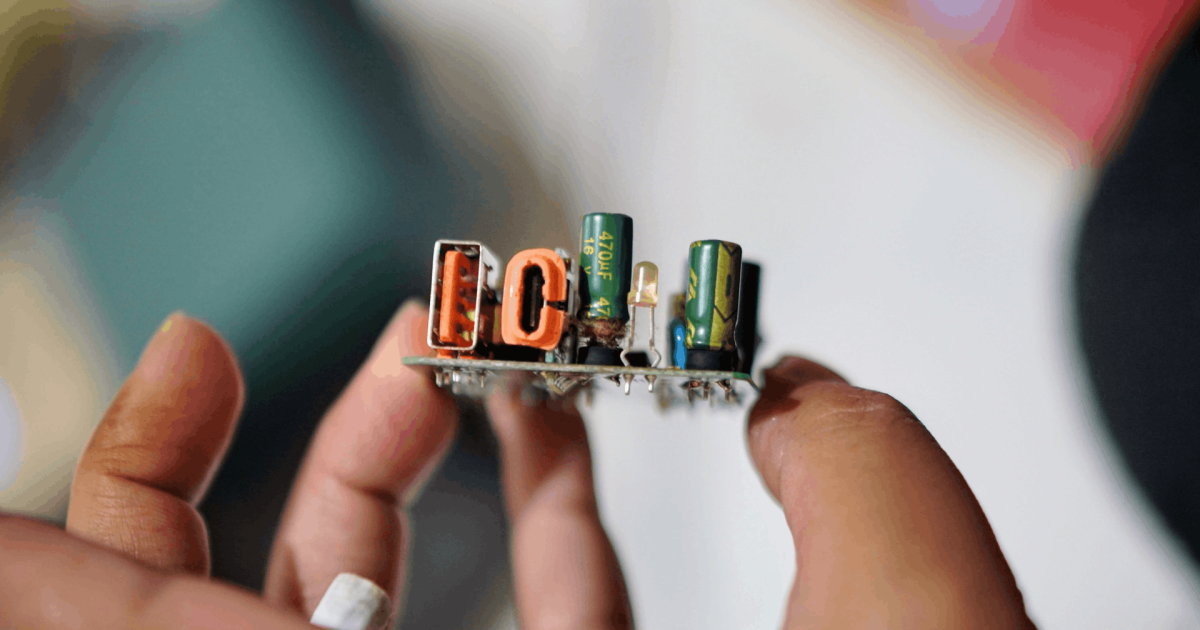


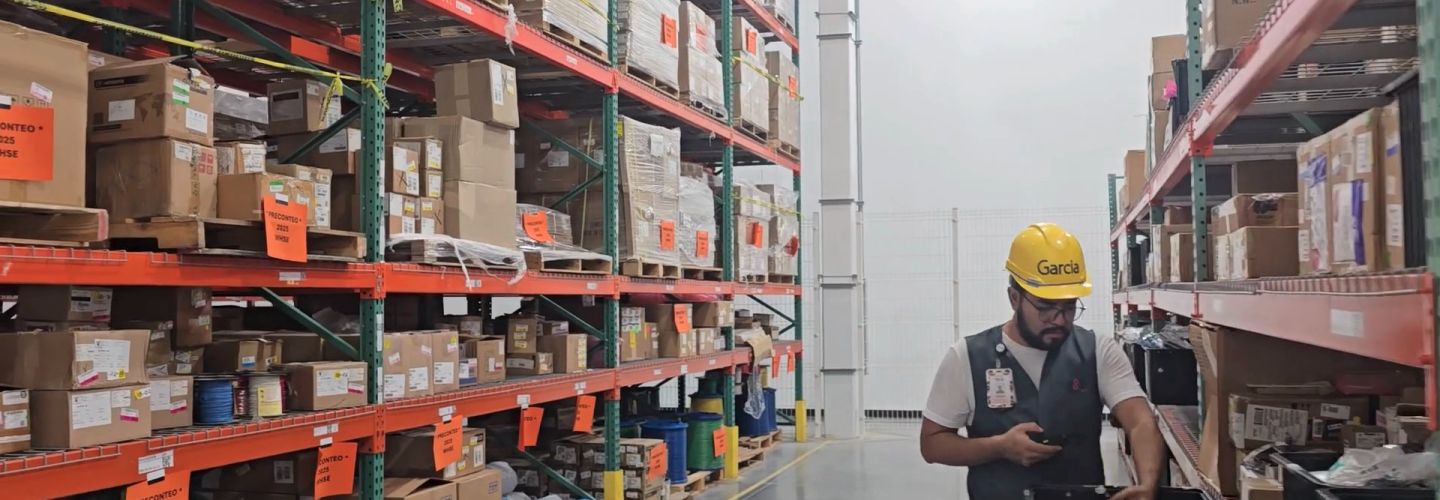
For UK industrial OEMs, managing a product through its full lifecycle is rarely the clean linear process that product lifecycle management (PLM) frameworks suggest [uk.pattern.com]. A series of reactive decisions made under time pressure often follows: a supplier announces end-of-life (EOL), a last-time-buy (LTB) window opens, and the program team has to decide how much to buy, whether to redesign, and what happens if neither option works cleanly. This article breaks down each of those decisions in practical terms, from how to size an LTB order to how component crosswalks actually work in production.
TL;DR
- EOL component notices require structured responses, not just a purchasing reaction. The decision tree includes LTB, redesign, and approved equivalent sourcing.
- LTB quantities are harder to size than they look. Overstocking ties up working capital; understocking creates a production gap.
- Strategic stocking is a supply chain position, not just a warehouse decision. It involves lead times, failure rates, and program end dates.
- Component crosswalks (finding functional equivalents) carry engineering risk that has to be validated before production use.
- A design and manufacturing partner with lifecycle support capabilities can absorb much of this operational burden before it becomes a crisis [buildamtech.com].
About the Author: Season Group has operated as a design and manufacturing partner since 1975, managing production continuity for industrial OEMs across a multi-site manufacturing network spanning the UK, Mexico, Malaysia, and China. Their lifecycle and supply chain management services include EOL crisis response, strategic component sourcing, and product transfer.
What does product lifecycle management actually mean for industrial electronics OEMs?
Product lifecycle management (PLM), in the industrial electronics context, is the discipline of keeping a product manufacturable, supportable, and profitable from first build through to final service unit [surefront.com]. For OEMs, this is less about PLM software and more about operational decisions: when to redesign, when to stock, when to transfer production, and when to accept that a product line has run its course [clevr.com].
The stages that create the most operational pressure are mid-life and decline. Early-stage programs have engineering capacity and schedule slack. Late-stage programs do not. Component availability narrows, supplier relationships change, and the volume economics that justified a custom ASIC or proprietary connector five years ago no longer hold.
What separates OEMs that handle this well from those that don’t is usually lead time on decisions, not technical capability. The engineering knowledge exists. The gap is typically a structured process for acting on obsolescence signals before they become production stoppages.
How should UK OEMs evaluate a last-time-buy notice from a component supplier?
A last-time-buy notice is not just a purchasing event. When a supplier announces an LTB, the risk multiplies across every product that carries that component [buildamtech.com]. Mapping exposure comes first: which assemblies use this part, in what quantities, across how many programs nearing the end of their lifecycle.
Once exposure is mapped, the LTB decision branches into three paths:
| Option | When it applies | Key risk |
|---|---|---|
| Place LTB order | Component has no viable equivalent; program has defined end-of-life | Working capital tied up; storage costs; part degradation over time |
| Redesign / re-engineer | Program has runway; equivalent design exists | NPI time, re-qualification cost, re-test requirements |
| Approved equivalent (crosswalk) | Functional substitute exists; qualification is feasible | Validation time; potential performance variance; PCB footprint compatibility |
The LTB quantity calculation is where most teams underestimate complexity. You need realistic forecasts for the program’s remaining unit volume, historical failure rates for that component in your specific build, and any service or repair obligations that extend beyond production end. Understating any of these creates a gap; overstating them ties up working capital with parts that will eventually be scrapped [buildamtech.com].
What is strategic stocking, and how does it differ from buffer stock?
Buffer stock is a short-term quantity held to absorb demand variability or supplier lead time fluctuation. Strategic stocking is a deliberate, longer-horizon position taken against a known supply risk, typically obsolescence or single-source dependency [oxmaint.com].
The distinction matters operationally because the two require different storage conditions, different financial treatment, and different review cycles. Strategic stock for an industrial program might be held for three to seven years. That requires:
- Controlled storage conditions appropriate to the component type (humidity, temperature, ESD)
- Periodic condition verification, especially for electrolytic capacitors and certain semiconductor packages
- Insurance and financial provisions that reflect the actual replacement cost if the stock is compromised
- Clear ownership: who authorizes drawdown, who monitors remaining quantity against projected consumption
At a single-site operation, managing this is a scheduling and warehouse problem. Spread across a multi-site manufacturing network, it becomes a sourcing and logistics coordination problem, particularly when the same component feeds builds in multiple countries under different regulatory environments.
How does a component crosswalk work, and what are the real engineering risks?
A component crosswalk is the process of identifying and validating a functional equivalent for a discontinued or unavailable part [buildamtech.com]. The term is sometimes used loosely to mean “we found a similar part,” but that conflates sourcing and engineering qualification, which are separate activities with separate risks.
A proper crosswalk involves:
- Parametric comparison – matching electrical specifications: voltage ratings, tolerance, temperature range, package type
- PCB footprint check – confirming the physical footprint is compatible, or assessing the rework required if it is not
- Functional validation – testing the candidate part in the actual circuit under operating conditions, not just bench-level equivalence
- DFT alignment – confirming the substitute part is testable with the existing test fixtures and in-circuit test (ICT) coverage
- Documentation and approval – updating the approved vendor list (AVL), bill of materials (BOM), and any customer or regulatory approval requirements
The risk that gets underestimated most often is step three. A parametrically identical part from a different manufacturer can behave differently at the circuit level, particularly in analog sections, RF paths, or power supply designs where component characteristics interact. Qualification testing must reflect the actual operating environment, not just datasheet comparison.
When does redesign make more sense than stocking or crosswalk?
Redesign is the right answer when the obsolete component is architecturally central, when a functional equivalent does not exist, or when the program has enough remaining life to absorb the NPI cost and re-qualification time.
The economics shift depending on program volume and remaining runway. A crosswalk costs less upfront but carries ongoing qualification risk. A redesign costs more initially but resolves the dependency permanently. For programs with five or more years of remaining production, redesign often produces better total cost outcomes [clevr.com].
DFX disciplines, specifically DFM and DFA, applied at the redesign stage are what ensure the new design does not introduce a different class of supply risk. Component selection during redesign should explicitly consider lifecycle status: prefer parts with confirmed multi-source availability, published longevity commitments, and broad distributor coverage.
What is Season Group’s role in supporting lifecycle management decisions?
Season Group has supported industrial OEMs through EOL transitions, LTB execution, and component crosswalk programs across its manufacturing network in the UK, China, Malaysia, and Mexico. With 50+ years of experience managing production continuity, the value lies in understanding how to size an LTB realistically, how to structure a crosswalk validation that will hold up under customer and regulatory scrutiny, and when to recommend a redesign rather than extend a supply workaround. As a design and manufacturing partner, Season Group’s ability to connect engineering and production decisions under one roof means that lifecycle options are tested against real manufacturing constraints and operational realities.
Frequently Asked Questions
What triggers a last-time-buy notice from a component supplier?
Suppliers issue LTB notices when a component reaches end-of-life, typically due to wafer or raw material discontinuation, low demand volumes that no longer justify production, or a strategic portfolio change. The notice period varies but is commonly 90 to 180 days [buildamtech.com].
How far in advance should OEMs begin lifecycle planning for a product?
Ideally, lifecycle planning begins at the design stage, with component selection informed by longevity and multi-source availability. In practice, most teams initiate structured lifecycle reviews when a product enters volume production and revisit them annually [surefront.com].
Can a component crosswalk be done without re-testing the full assembly?
Rarely, and the exceptions are narrow. Passive components with simple parametric roles sometimes qualify with limited testing. Active components, power semiconductors, and anything in a signal-critical path require functional validation in the actual circuit. Skipping this is a quality and liability risk [buildamtech.com].
What storage conditions are required for strategic component stock?
This depends on the component type. Most semiconductors require temperature-controlled, humidity-monitored storage. Electrolytic capacitors may need re-forming after extended storage. Solderability can degrade on leads and pads over time. Industry guidance from IPC and component manufacturers should govern specific conditions [oxmaint.com].
How do you calculate the right LTB quantity?
Start with projected remaining production volume, add anticipated field service and repair demand, apply your historical failure rate for that component, and include a reasonable buffer for forecast variance. Then stress-test the number against your working capital constraints and storage capabilities [buildamtech.com].
What is the difference between an approved vendor list and a crosswalk?
An AVL lists pre-approved sources for components already in the design. A crosswalk is the process of adding a new, functionally equivalent part to that AVL when the original source is no longer available. The crosswalk process generates the engineering evidence that justifies the AVL update [uk.pattern.com].
When should a UK OEM consider transferring production to a different manufacturing site during a lifecycle transition?
Production transfer becomes worth evaluating when regional supply availability diverges, when regulatory changes affect one geography but not others, or when remaining program volume falls below a site’s economic threshold. Transfer decisions should be made with standardized process documentation in place to avoid re-qualification delays [clevr.com].
About Season Group
Season Group is a design and manufacturing partner with 50+ years of experience supporting electronics OEMs from prototype through full production lifecycle. Operating across manufacturing sites in the UK, Mexico, Malaysia, and China, the company provides integrated DFX engineering, PCBA and full box build production, and structured lifecycle and supply chain management services. For industrial OEMs navigating EOL transitions, LTB decisions, or component crosswalk programs, Season Group brings both the engineering and the production infrastructure to support those decisions with real manufacturing context rather than advisory-only guidance.
If your program is approaching a component EOL or you’re planning ahead for lifecycle transitions, visit https://www.seasongroup.com or reach out to inquiry@seasongroup.com to talk through your requirements with our team.