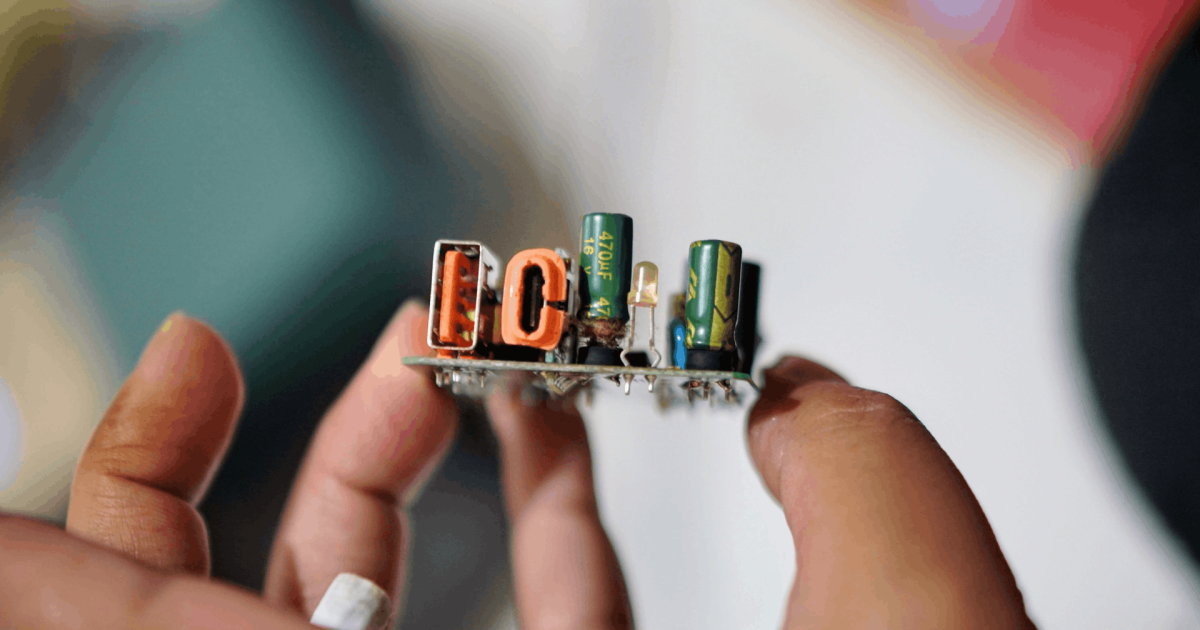



Component crises are a recurring operational reality. For UK hardware companies, supply chain disruptions in semiconductors, passives, and mechanical sub-assemblies have repeatedly exposed the gap between a well-designed product and one that can actually be built and delivered at scale. Effective supply chain risk mitigation starts long before a shortage hits: it begins at the design stage, runs through supplier qualification, and extends to lifecycle planning that accounts for component obsolescence before it becomes an emergency.
TL;DRTL;DR
- Component crises are predictable in pattern, even when the specific cause is not – resilience is built through process, not luck.
- DFM and DFX decisions made early in a product’s life directly determine how exposed you are when a component becomes scarce or obsolete.
- Manufacturing sites across geographically diverse regions reduce single-point-of-failure risk in production.
- Supplier diversification and managed inventory strategies are the two most practical levers available to hardware OEMs right now [ajg.com].
- Supply chain resilience requires continuous monitoring, qualification, and lifecycle management across a product’s full run.
About the Author: Season Group is a global design and manufacturing partner with 50+ years of experience in electronics manufacturing since 1975, supporting hardware OEMs across industrial, power, access security, and automotive sectors through design, production, and lifecycle management.
What does supply chain resilience actually mean for a hardware company?
Supply chain resilience is the operational capacity to absorb disruption, adapt to changed conditions, and continue delivering product without a breakdown in customer commitments [gov.uk]. For hardware companies, this is more concrete than it sounds in frameworks and policy documents. It means having a second-source approved before you need it, not after a lead time doubles. It means knowing which components in your BOM carry a single-source risk and having an engineering answer ready – whether that is a qualified alternative part or a redesign that removes the dependency altogether.
UK manufacturers have faced a compounding set of pressures: post-pandemic logistics instability, demand surges in semiconductors driven by automotive and consumer electronics, and geopolitical friction affecting component flows from Asia [fsb.org.uk]. The companies that navigated these periods with the least damage were not necessarily the largest – they were the ones whose supply chain processes were already built for variability rather than optimized purely for cost [ajg.com].
Why do DFM decisions made at the design stage affect supply chain risk?
Building on the definition above, the harder question is why so many hardware companies still treat DFM as a late-stage manufacturing concern rather than a risk management tool. Every component specified in a schematic is also a supply chain commitment. When an engineer selects a part based on availability and cost at the time of design freeze without considering lifecycle status, single-source risk, or form-factor alternatives, they are making a supply chain decision – usually without realizing it.
DFX practices applied during NPI address this directly:
- DFM (Design for Manufacturability): Ensures the design can be built consistently at volume on standard production equipment, reducing the chance that a component change forces a line modification.
- DFA (Design for Assembly): Reduces part count and assembly complexity, which also reduces the number of components that can become availability bottlenecks.
- DFT (Design for Testability): Ensures that if a substitute component is qualified, it can be validated through existing test fixtures without a complete re-engineering of the test process.
The practical outcome: a product designed with these constraints in mind is significantly easier to modify when a component becomes unavailable, because the design itself has fewer hard dependencies on specific parts. This is where supply chain risk mitigation actually begins – not in procurement, but in engineering.
What inventory and sourcing strategies give hardware OEMs the most protection?
A related but distinct question is how to manage component risk once a product is already in production. At that stage, the DFX leverage is reduced, and the work shifts to procurement strategy and supplier management.
The shift away from just-in-time toward more buffer-oriented models has been well documented since 2020 [ajg.com]. For UK hardware companies specifically, a few approaches have consistently shown practical value [business.amazon.co.uk]:
- Strategic buffer stock: Holding 90-180 days of inventory on long-lead or single-source components is not capital-inefficient if the alternative is a production halt. The calculation needs to account for the cost of line downtime, not just the cost of the inventory itself.
- Dual or multi-sourcing: Qualifying a second source for critical components before you need it, even at a slightly higher unit cost, is standard practice in aerospace and automotive supply chains – and increasingly necessary in industrial electronics builds.
- Approved Vendor List (AVL) discipline: Maintaining a live, updated AVL with lifecycle status flags on each component allows purchasing teams to act on risk before it becomes a crisis, rather than reactively.
- Franchise and authorized distribution relationships: In periods of genuine shortage, access to allocated inventory through authorized channels is often the difference between fulfilling orders and missing them.
Supply chain cyber risk is also an emerging concern for UK manufacturers in 2026, particularly around the integrity of digital procurement systems and supplier data [trethowans.com]. Resilience cannot be treated as a purely physical or logistical problem.
How does geographic manufacturing diversification reduce component crisis exposure?
Stepping back from the procurement detail, a separate structural advantage is worth examining: geographic manufacturing diversification. A build that can only run in one facility, in one country, on one set of qualified lines is inherently more exposed to any regional disruption – whether that is a logistics bottleneck, a regulatory change, or a localized supplier failure [gov.uk].
Manufacturing sites that span multiple regions, with standardized processes and transferable builds, allow production to be shifted when one region faces a specific constraint. This is not theoretical. During extended lead time periods for certain passive components, builds running in China faced different allocation dynamics than those running in Malaysia or Mexico. A company with a single-site strategy had no flexibility; one with standardized processes across multiple regions could reallocate.
The key enabler is process standardization: if your manufacturing process is documented, validated, and replicated across sites, a regional transfer is an operational decision, not an engineering project.
How does Season Group approach component crisis management in practice?
Season Group’s position as a design and manufacturing partner with 50+ years in electronics manufacturing means that component crises are not new territory. The team has navigated semiconductor shortages, EOL events on long-running industrial products, and supply disruptions affecting builds across its manufacturing sites in China, Malaysia, Mexico, and the UK. The practical approach combines early DFX involvement during NPI, continuous AVL lifecycle monitoring, managed buffer inventory for customers on long-production-run programs, and engineering support to qualify alternative components when substitution is the only viable path. For UK hardware OEMs looking to reduce supply chain exposure without rebuilding their entire procurement operation, the most effective starting point is usually a BOM-level risk review – identifying the highest-risk components before the next shortage event arrives.
Frequently Asked Questions
What is supply chain risk mitigation in electronics manufacturing?
It is the set of design, procurement, and operational practices that reduce the probability and impact of component shortages, supplier failures, and logistics disruptions on a product’s ability to be built and delivered.
When should supply chain risk be addressed in a product’s development?
At the earliest possible stage. DFX decisions made during NPI directly affect how easy or difficult it is to substitute components later. Risk addressed at design review costs a fraction of what it costs to resolve during a production crisis.
What is the most common cause of component crises for UK hardware companies?
Single-source dependencies on specific semiconductor packages or proprietary components, combined with insufficient buffer inventory and no qualified alternative part on the AVL.
How much buffer inventory is reasonable for a hardware OEM to hold?
This depends on the component’s lead time, criticality, and price volatility. For long-lead or single-source parts, 90-180 days of stock is a commonly applied benchmark, though the right level should be calculated against the actual cost of a production halt.
What is the difference between DFM and DFX?
DFM (Design for Manufacturability) is one element within the broader DFX framework. DFX includes DFM, DFA (Design for Assembly), DFT (Design for Testability), and other design disciplines that each address a specific downstream risk.
Can a product already in production be made more supply-chain resilient?
Yes, but the options are more constrained. The primary levers are supplier diversification, buffer inventory, and component substitution engineering – each of which carries cost and time implications that would have been lower if addressed at design stage.
What role does manufacturing geography play in supply chain resilience?
Manufacturing across multiple regions reduces exposure to localized disruptions. The benefit is only realized if processes are standardized enough that production can actually be transferred between sites without a major re-qualification effort [gov.uk].
About Season Group
Season Group is a global design and manufacturing partner with 50+ years of electronics manufacturing experience since 1975. The company operates manufacturing sites across China, Malaysia, Mexico, and the UK, with standardized processes designed to support production continuity and resilience across geographies. Season Group works with hardware OEMs across industrial, power, access security, and automotive sectors, offering integrated DFX engineering, NPI support, and lifecycle management that spans component sourcing through EOL crisis resolution. Visit https://www.seasongroup.com or reach out to inquiry@seasongroup.com to discuss your requirements with the team.