

For robotics and automation companies, the design and manufacturing handoff is rarely just about getting boards built. The real challenge starts when a populated PCBA needs to become a functional, deployable subsystem: motion controllers, sensor assemblies, cable harnesses, enclosures, and firmware all need to converge in one place. Managing that transition well, from verified design to repeatable production, determines whether a product scales or stalls.
TL;DR
- A bare PCBA is only one layer of a mechatronic system; the design and manufacturing handoff must account for mechanical integration, cable assembly, firmware loading, and functional test.
- UK robotics companies face specific constraints around low-to-medium volumes, fast NPI cycles, and multi-disciplinary supply chains that a standard PCB assembler is not set up to handle.
- DFX disciplines (DFM, DFA, DFT) applied early reduce rework and integration failures downstream.
- The most common failure points in mechatronics handoffs are late-stage design changes, incomplete test specifications, and misaligned bill-of-materials (BOM) ownership.
- Choosing a manufacturing partner with in-house capability across PCBA, wire harness, and box build reduces interface risk and coordination overhead.
About the Author: Season Group is a design and manufacturing partner with 50+ years of electronics manufacturing experience and a multi-site production network across the UK, Mexico, Malaysia, and China. The company works with robotics and automation OEMs across NPI, PCBA, full box build, wire harness assembly, and lifecycle support.
Why does the design and manufacturing handoff matter more in mechatronics than in standard electronics?
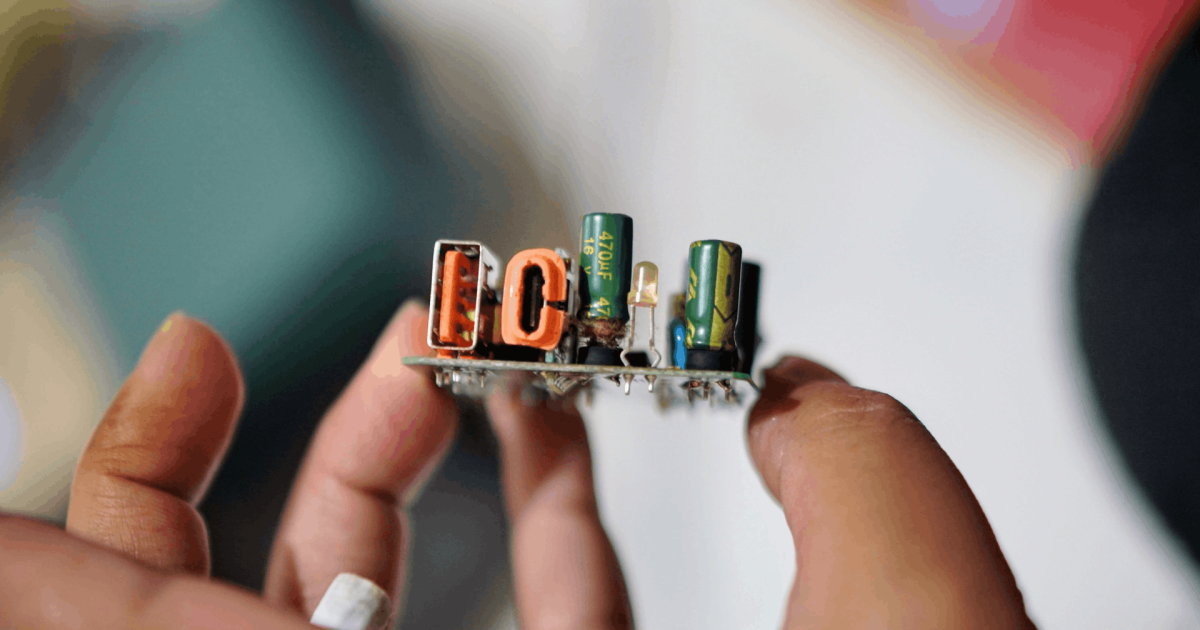
In standard electronics production, the output of a design and manufacturing handoff is typically a tested PCBA ready for integration. In mechatronics, that tested board is only one node in a system that also includes actuators, power distribution, structural components, and firmware [tps-elektronik.com]. Each of those layers introduces tolerance stack-ups, connector compatibility issues, and test coverage gaps that a PCBA-only supplier has no visibility over.
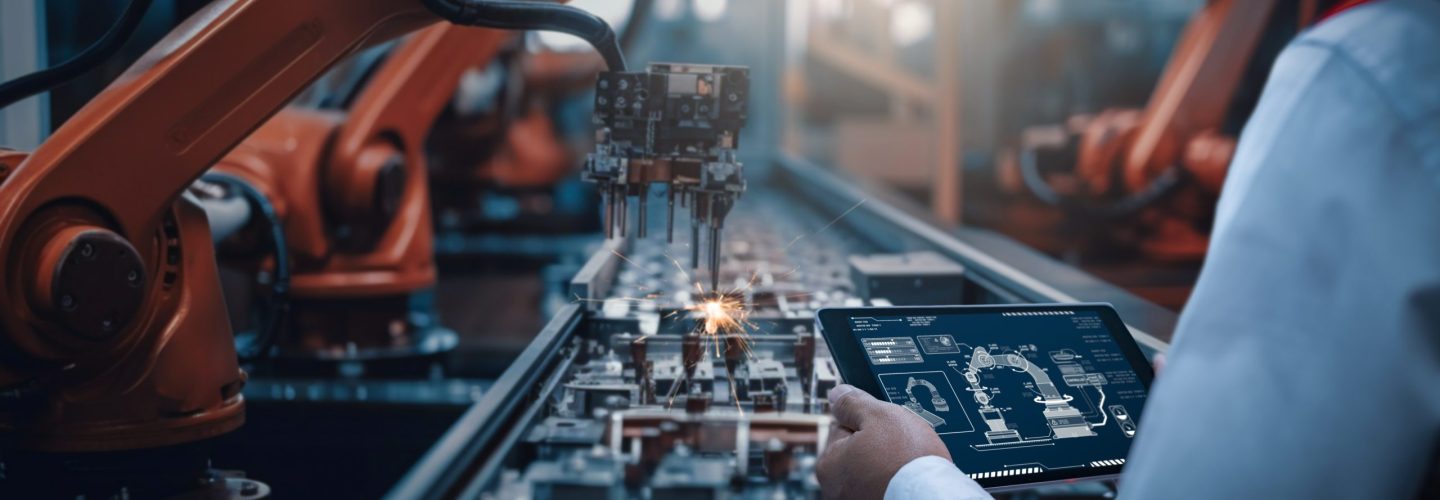
UK robotics companies are building systems where a motor drive board, its associated harness, an aluminum chassis, and a real-time firmware stack all have to work as one assembly from day one of production. If the manufacturing partner is only scoped to the board, the integration work falls back on the OEM’s engineering team, often at the worst possible time: during NPI when resources are already stretched.
The consequence is predictable. Late-stage mechanical interference, harness routing conflicts, and functional test gaps that were never caught at the subsystem level. These are not design failures in isolation; they are handoff failures.
What DFX disciplines apply specifically to mechatronic systems?
DFX is the collective term for a set of design disciplines (DFM, DFA, DFT, DFR) that optimize a product for how it will actually be made, assembled, tested, and serviced. In a mechatronic context, each discipline carries weight that pure electronics builds do not surface [tps-elektronik.com]:
- DFM (Design for Manufacturability): Covers PCBA process compatibility (component pitch, copper pour clearances, panelization), but in mechatronics also extends to machined part tolerances, insert molding feasibility, and how a plastic enclosure mate-fits to a populated board.
- DFA (Design for Assembly): Connector orientation, harness routing paths, fastener access, and board-to-chassis alignment all determine whether a human or automated assembly process can achieve consistent cycle times without damage.
- DFT (Design for Test): In a mechatronic system, functional test coverage must reach beyond ICT (in-circuit test) to include motion validation, sensor calibration, end-of-travel detection, and communication stack verification. Test point placement at the PCB level must be coordinated with the system-level test plan from the start.
- DFR (Design for Reliability): Vibration, thermal cycling, and ingress protection requirements specific to robotics deployment environments need to be reflected in material selection, conformal coating specifications, and connector locking mechanisms.
Applying these disciplines at concept stage, rather than during pre-production review, is what separates a handoff that flows from one that requires multiple ECO (engineering change order) cycles before the line can run.
Where do UK robotics companies most commonly lose time during NPI?
The most expensive NPI delays in mechatronic programs almost always trace back to one of three root causes.
Incomplete test specifications. An OEM hands over a BOM and Gerbers, but the functional test requirements are either undefined or written for bench validation rather than production line execution. The manufacturing partner builds a test fixture after first articles, discovers coverage gaps, and the program pauses while the spec is rewritten.
BOM ownership gaps. In a mechatronic assembly, the BOM spans mechanical bought-out parts, custom fabrications, electronic components, and firmware versions. When ownership of that BOM sits across multiple teams (hardware, mechanical, firmware, procurement), updates propagate unevenly. The manufacturing partner receives revision-mismatched parts and discovers the conflict on the line.
Late mechanical changes. A board revision driven by a schematic correction invalidates a previously quoted enclosure or changes a connector position relative to a panel cutout. If DFA review did not happen before tooling was committed, the rework cost and delay fall late in the program where they hurt most.
UK robotics companies working at volumes of a few hundred to a few thousand units per year [web-eur.cvent.com] are particularly exposed here because they do not have the program management overhead of larger OEMs. The NPI process needs to be structured enough to catch these issues early, which is an argument for consolidating mechanical and electronic scope under one design and manufacturing partner rather than managing separate suppliers for each.
How should a UK robotics OEM structure the manufacturing handoff for a multi-discipline assembly?
None of the DFX and NPI discipline described above delivers value until the handoff structure itself is sound. A practical approach works in sequence:
- Early manufacturing engagement: Involve the design and manufacturing partner at concept or early schematic stage, not at DVT (design verification test). This is when DFM and DFA feedback costs nothing to act on.
- Unified BOM governance: Establish a single BOM owner and a change-control process that covers all disciplines before parts are sourced.
- System-level test specification before tooling: Write the production functional test plan (covering board-level, subsystem-level, and end-of-line tests) before committing to fixture tooling or enclosure tooling. Test coverage gaps found here are cheap; gaps found during production launch are not.
- Pilot build with full documentation review: Use the first pilot build as a live audit of the assembly instructions, test procedures, and quality records. Do not skip this step at low volumes; it is where institutional knowledge about the build gets captured in repeatable form.
- Clear escalation paths for in-line anomalies: Define who owns a non-conformance decision before production starts. In mechatronics, a functional failure at end-of-line may involve board, firmware, or mechanical root cause. The resolution path needs to be pre-agreed.
Robotics companies operating in the UK face additional pressure from compressed development cycles and the expectation of rapid volume response as market traction builds [techuk.org]. A manufacturing partner that can absorb scope across PCBA, harness, and box build from early NPI through production ramp reduces the coordination load significantly.
How does integrated manufacturing scope reduce handoff risk in mechatronics?
Season Group works as a design and manufacturing partner across the full scope that mechatronic builds require: PCBA, UL-recognized wire harness and cable assembly, plastic injection molding, and box build, alongside DFX-led engineering engagement from early concept stage. With a manufacturing network across the UK, Mexico, Malaysia, and China, the infrastructure is structured to support quick-turn NPI in the UK while scaling volume production regionally as programs grow. For robotics and automation OEMs navigating the transition from prototype to repeatable production, integrated in-house capability across disciplines matters most at the handoff stage, where scope gaps between suppliers create the most risk.
Frequently Asked Questions
What is a mechatronics design and manufacturing handoff?
It is the transfer of a mechatronic product’s design, BOM, and test specifications to a manufacturing partner for production. Unlike a standard PCBA handoff, it spans mechanical, electronic, firmware, and assembly disciplines simultaneously.
Why is DFT important for robotics PCBA builds?
Because functional test coverage in a robotics system must go beyond standard ICT to include motion, sensing, and communication validation. Test point placement and fixture design need to be aligned with the system test plan before tooling is committed.
What is the biggest risk in splitting PCBA and mechanical assembly across different suppliers?
Interface risk. When no single supplier owns the integrated assembly, tolerance conflicts, connector incompatibilities, and BOM misalignments are discovered late, typically on the production line rather than during design review.
How early should a manufacturing partner be involved in a robotics NPI program?
As early as the schematic or concept stage. DFM and DFA feedback at that point is free to incorporate; the same feedback after tooling has been committed can cost weeks and significant rework expense.
Does volume affect how a mechatronics handoff should be structured?
Yes. At lower volumes (hundreds to low thousands of units), program management overhead per unit is higher, which makes early consolidation of scope and tight BOM governance more important, not less. Lower volume does not mean lower complexity.
What certifications are relevant for robotics electronics manufacturing?
ISO 9001 covers general quality management. For builds going into industrial or safety-relevant deployments, IPC Class 2 or Class 3 workmanship standards, AS9100D-aligned processes, and relevant functional safety frameworks (e.g., IEC 61508) may apply depending on the end application.
What is the difference between box build and full mechatronic integration?
Box build typically refers to final assembly of a product into its enclosure, including board installation, harness connection, and labeling. Full mechatronic integration adds subsystem-level functional validation, motion or sensor calibration, and verification that all mechanical and electronic disciplines perform correctly as a system.
About Season Group
Season Group is a design and manufacturing partner with 50+ years of experience (since 1975) supporting electronics OEMs from early-stage design through full production and lifecycle management. With a manufacturing network across the UK, China, Malaysia, and Mexico, the company provides integrated DFX engineering, PCBA, wire harness assembly, plastic injection molding, box build, and supply chain management under one roof. For robotics and automation companies navigating complex NPI handoffs and multi-discipline production builds, Season Group offers the engineering depth and manufacturing breadth to reduce handoff risk from prototype through volume production. Visit https://www.seasongroup.com or reach out to the team at inquiry@seasongroup.com to talk through your program requirements.