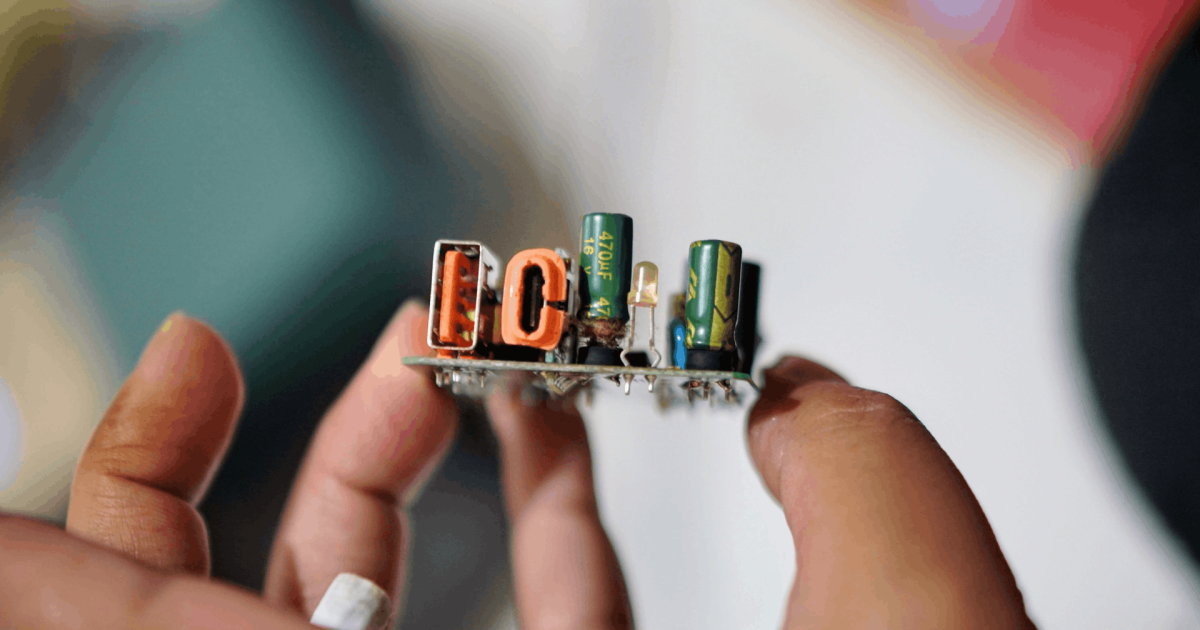



When mechanical and electrical engineering teams hand off work to each other without a shared manufacturing context, DFX problems accumulate silently long before a prototype exists. Tolerances get set in isolation, PCB keep-out zones get missed in enclosure files, and thermal assumptions made in one discipline contradict the layout decisions made in another. By the time these conflicts surface during the new product introduction process, fixing them costs significantly more than catching them early would have. The handoff itself is rarely the root cause; the root cause is that each discipline optimizes for its own constraints without visibility into the other’s.
TL;DR
- ME/EE handoff failures are a leading source of DFX problems that do not appear until prototyping or NPI, at which point rework is expensive.
- The core issue is not communication style but structural: each team works from different assumptions and documents that are rarely reconciled before design freeze.
- DFM, DFA, and DFT reviews work best when they span both disciplines simultaneously, not sequentially.
- The engineering design review process needs to surface cross-discipline conflicts as a structured gate, not as an informal checkpoint.
- Organizations that embed manufacturing knowledge into early design stages consistently see fewer ECOs, faster NPI cycles, and more stable first-article builds.
About the Author: Season Group has operated as a design and manufacturing partner for 50+ years, supporting OEMs through the full arc from concept and DFX reviews to volume production across a multi-site manufacturing network in China, Malaysia, Mexico, and the UK. This article draws on direct experience managing cross-discipline handoffs during NPI programs for industrial, access security, and power products.
Why do ME/EE handoffs break down even when both teams are competent?
The breakdown is structural, not personal. Mechanical engineers work from CAD files and enclosure drawings; electrical engineers work from schematics and layout files. These two representations of the same product are rarely kept in sync during early design [resources.altium.com]. When the ME team finalizes a connector position based on the enclosure assembly sequence, and the EE team simultaneously routes the PCB assuming a different connector orientation, neither team is wrong within their own domain. The conflict only becomes visible when both files are overlaid, which often does not happen until prototype assembly.
The handoff is typically treated as a singular event: design is “finished” and the file is passed over [hellofrankduran.com]. That framing misses the reality that mechanical and electrical decisions are interdependent throughout the design process, not just at the end. Keep-out zones, mounting boss locations, antenna ground planes, and thermal relief areas all require active negotiation between disciplines, not a one-way transfer [questworks.games].
What DFX problems are most commonly caused by poor ME/EE alignment?
Building on the structural breakdown above, the practical DFX failures that result tend to cluster around a predictable set of issues:
- DFM failures: PCB dimensions that do not account for enclosure snap-fit deflection, or panel breakaway tabs positioned where a mechanical feature causes stress cracking during depaneling.
- DFA failures: Connector placements that are logically correct on the schematic but physically inaccessible during assembly due to enclosure geometry or cable routing constraints.
- DFT failures: Test point locations agreed by the EE team that are covered by a standoff or board-to-board connector specified by the ME team, making ICT access impossible without redesign.
- Thermal failures: Heat dissipation assumptions in the PCB layout that contradict the airflow paths and vent placements in the enclosure design.
- Tolerance stack-up conflicts: Mechanical tolerances on injection-molded parts that, when combined with PCB dimensional tolerances, create assembly interference not visible in either team’s individual simulation [fractory.com].
Each of these failure modes is avoidable. None of them require advanced tooling to detect. They require both teams to review the same integrated model before design freeze.
How does the engineering design review process need to change to catch these issues early?
A related but distinct question from where problems originate is how the review process should be structured to prevent them. The standard engineering design review process in most organizations runs sequentially: mechanical review, then electrical review, then a combined check before prototype release. That sequence means cross-discipline conflicts are identified at the end of the process, not throughout it [hellopm.co].
A more effective structure runs cross-discipline reviews at each gate, not just the final one:
| Review Gate | What ME Needs from EE | What EE Needs from ME |
|---|---|---|
| Concept freeze | Component height map, connector count and type | Enclosure envelope, primary assembly direction |
| Layout start | Keep-out zones, grounding requirements, thermal zones | PCB mounting scheme, cable egress points |
| Design freeze | Final PCB outline with test point map | Final enclosure with all hardware locations |
| Pre-prototype | Assembly sequence, rework access requirements | Board support during assembly, fixturing constraints |
Running this as a structured gate rather than an informal check changes the accountability. It also creates documentation that the new product introduction process can reference when questions arise during first article inspection or early production builds [6sigma.us].
What does a manufacturing-aware handoff actually look like in practice?
Stepping back from the review structure, the harder operational question is what changes when manufacturing knowledge is embedded earlier. The answer is not simply “add a DFM review.” It is that the constraints informing each discipline’s decisions change from day one.
When a manufacturing partner is involved before design freeze, the ME team learns that a specific snap-fit geometry creates a depaneling stress point, and adjusts the PCB panel layout accordingly. The EE team learns that a test point cluster near a board edge will be shadowed by the enclosure during in-circuit test, and relocates it before routing is complete [uplevelteam.com]. Neither change requires a formal ECO. Both prevent one.
Practically, this means:
- Sharing assembly drawings with the manufacturing partner before PCB layout is finalized, not after.
- Running DFA analysis against the actual assembly line configuration, not a generic checklist.
- Confirming that ICT fixture design is feasible given the current test point map and enclosure geometry.
- Reviewing the full BOM alongside the enclosure for component sourcing constraints that affect mechanical sizing decisions.
The goal is not to slow down the design process. It is to front-load the decisions that would otherwise surface as expensive surprises during NPI.
How Season Group Approaches ME/EE Handoff Risk
Season Group’s position as a design and manufacturing partner means its engineering team engages during the design phase, not just at production handover. With 50+ years in electronics manufacturing and dedicated NPI capabilities, the team regularly reviews ME/EE alignment issues before first prototype builds, using DFM, DFA, and DFT analysis as integrated checks rather than sequential filters. For OEMs building connected hardware across industrial, power, and access security markets, catching a keep-out conflict or a tolerance stack-up before tooling is cut is the difference between a clean NPI and a costly redesign loop.
Frequently Asked Questions
What is the most common DFX failure caused by ME/EE handoffs?
DFA failures related to connector accessibility and DFT failures caused by obstructed test points are among the most frequent, because both result from decisions made independently in each discipline’s toolchain.
When should manufacturing be involved in the handoff process?
Before design freeze, not after. Specifically, before PCB layout is finalized and before enclosure tooling is committed.
Does a structured engineering design review process slow down development?
In most programs, it reduces total cycle time by eliminating ECOs that would otherwise occur during or after NPI. The review adds time early; it removes more time later.
What is DFX in the context of ME/EE handoffs?
DFX is a collective term for design methodologies including DFM (manufacturability), DFA (assembly), and DFT (testability) that evaluate how design decisions affect downstream production outcomes [fractory.com].
Can simulation tools replace cross-discipline design reviews?
Simulation reduces some risks, but most ME/EE handoff failures occur at the boundary between models, where assumptions differ rather than where calculations are wrong. Reviews surface assumption conflicts that simulation does not.
What documentation should accompany a proper engineering handoff?
At minimum: integrated assembly drawings, a cross-referenced test point map, a tolerance stack-up analysis, and a BOM flagged for sourcing constraints that affect mechanical design choices [hellopm.co].
How does poor ME/EE alignment affect the new product introduction process?
It typically generates engineering change orders during or after first article inspection, delays production release, and increases tooling modification costs, all of which compress the margin available in the NPI budget.
About Season Group
Season Group is a design and manufacturing partner with 50+ years of experience supporting electronics OEMs from early concept through volume production. With a manufacturing network across China, Malaysia, Mexico, and the UK, and integrated DFM, DFA, and DFT capabilities embedded in its NPI process, Season Group works with industrial, power, access security, and automotive customers to reduce design risk before the first prototype is built. The team’s experience spans complex multi-discipline builds including injection-molded enclosures, PCBA, wire harness assembly, and IoT-connected hardware.
If your program is approaching design freeze and the ME/EE alignment has not been reviewed against your production process, it is worth a conversation before tooling is committed. Visit https://www.seasongroup.com or contact us at inquiry@seasongroup.com to talk through your requirements with our team.