


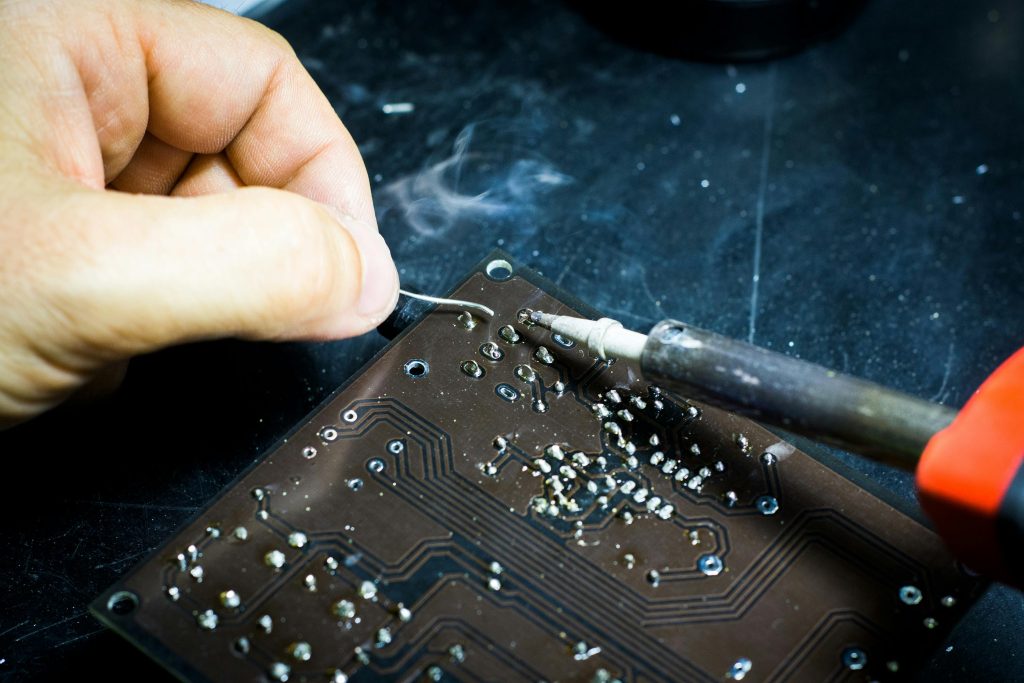
A component lifecycle strategy is a structured, proactive framework for managing every electronic component used in a product from initial design selection through end-of-life (EOL), with the goal of ensuring continuous production, cost stability, and design integrity across the full product lifespan. Done well, it transforms component risk management from a reactive fire-fighting exercise into a systematic competitive advantage built into the product architecture itself.
TL;DR
- Component obsolescence is not a supply chain problem alone; it starts at the design stage and must be addressed there first.
- A durable product lifecycle strategy requires lifecycle intelligence on every component before the first BOM is locked.
- PCB component sourcing decisions made early in NPI have a compounding effect on supply chain resilience strategy years later.
- Electronics supply chain management requires layered redundancy: approved alternates, multi-region suppliers, and lifecycle monitoring as ongoing operations.
- Reactive EOL management is significantly more expensive and disruptive than proactive component lifecycle management.
About the Author: Season Group is a global Design and Manufacturing Partner with over 50 years of experience in electronics manufacturing and integrated design engineering, including wireless expertise through its subsidiary SG Wireless. This article draws from practical experience managing component continuity across complex, long-lifecycle products in industrial, automotive, aerospace, and access security sectors.
Why Do Component Lifecycles Outlive Product Development Plans?
The core tension in electronics manufacturing supply chain management is straightforward: product teams plan in months, but products live for years or decades. A component selected during a six-month NPI cycle may have a two to three year production lifecycle from the semiconductor manufacturer’s side [bencor-llc.com]. That mismatch is where most component crises originate.
Compounding factors include:
- Semiconductor consolidation: Fewer manufacturers producing a wider range of components means discontinuation decisions are made based on portfolio economics, not your production schedule.
- Technology acceleration: Consumer-driven component segments turn over rapidly, and industrial or commercial products built on shared component platforms inherit that volatility [vergentproducts.com].
- Long-tail product commitments: Products in industrial, healthcare, or infrastructure sectors often carry 10 to 20 year support obligations, far beyond standard component availability windows.
- Design debt: When early design decisions deprioritize component longevity in favor of cost or performance, the debt compounds at every refresh cycle.
Understanding these dynamics is the starting point for any credible supply chain lifecycle management approach.
What Does a Proactive Component Lifecycle Strategy Actually Include?
Component lifecycle management (CLM) is not a spreadsheet exercise. It is an operational discipline that runs parallel to product development and manufacturing throughout the product’s life [bencor-llc.com].
A functional CLM framework covers these core areas:
| CLM Area | What It Involves | When It Applies |
|---|---|---|
| Lifecycle classification | Assigning lifecycle status (active, NRND, EOL) to every BOM component | NPI and ongoing monitoring |
| Approved alternate identification | Qualifying drop-in or near-drop-in substitutes per component | Design stage and pre-production |
| Multi-source supplier strategy | Establishing at least two qualified suppliers per critical component | Before production ramp |
| PCB component sourcing audits | Reviewing BOM against current distributor stock and lead time data | Quarterly or at BOM freeze |
| EOL alert monitoring | Subscribing to manufacturer product change notices (PCNs) | Continuous, post-launch |
| Last-time buy (LTB) planning | Calculating and executing strategic inventory purchases ahead of discontinuation | Upon EOL notification |
| Redesign triggers | Defined thresholds that initiate DFM review and component substitution | Tied to risk scoring |
Each of these needs ownership, tooling, and a review cadence to function in practice [resources.altium.com].
How Should Component Risk Management Be Embedded at the Design Stage?
The single most impactful point for component risk management is the design stage, specifically during Design for Excellence (DFX) reviews before the BOM is locked [bencor-llc.com]. At this point, substitutions are inexpensive. Post-production, they can require full re-qualification, new regulatory testing, and tooling changes.
Practical steps to embed component risk at design:
- Run lifecycle checks before component selection, not after. Use parametric search tools that include lifecycle status, not just technical specifications. A component with the right specs but a two-year EOL horizon is a liability in a long-lifecycle product [resources.altium.com].
- Preference components with multiple qualified sources. Single-source components should be flagged for alternate identification before BOM freeze.
- Apply DFX principles to component choice. DFMA, DFT, and DFR reviews should include a component availability dimension, not just functional or testability criteria.
- Document alternates in the BOM. An approved alternate list embedded in the BOM from NPI is an underused but highly effective supply chain resilience strategy.
- Score BOM risk before production ramp. A simple risk matrix plotting lifecycle status against sourcing difficulty gives procurement and engineering a shared language for prioritization.
At Season Group, DFX reviews during NPI are structured to surface these risks before they become production constraints. Engineering and supply chain teams review BOM composition together, which is a process integration that most purely transactional EMS models do not support.
What Makes Electronics Supply Chain Management Different for Long-Lifecycle Products?
Standard electronics supply chain management practice optimizes for cost and lead time. Long-lifecycle product management requires optimizing for continuity and substitutability as primary objectives, with cost as a secondary consideration [qualtrics.com].
Key operational differences include:
- Inventory philosophy: Just-in-time works for high-turnover consumer products. Long-lifecycle industrial or healthcare products often require strategic buffer stock and LTB execution.
- Supplier qualification depth: A supplier approved for a three-year consumer product may not have the quality systems required for a 15-year industrial deployment. Certifications such as ISO 9001, IATF-TS16949, and AS9100D are meaningful indicators of process discipline.
- Geographical redundancy: Supply chain disruption management is more manageable when approved sources span multiple regions. A single-country supply base creates concentration risk that becomes visible only during a disruption [productboard.com].
- Aftermarket and repair continuity: Long-lifecycle products generate warranty, repair, and refurbishment obligations. Component sourcing plans must account for service parts, not just production volumes.
A manufacturing supply chain strategy that treats all product types identically will consistently underserve long-lifecycle product requirements.
How Should EOL Crises Be Managed When They Happen Anyway?
Even with proactive CLM in place, EOL crises occur. The difference is in how much lead time and optionality you have when they do.
When a critical component reaches EOL without a qualified alternate:
- Assess actual production exposure. Quantify remaining demand, safety stock, and open order lead times before making any sourcing or redesign decisions.
- Evaluate all sourcing options in parallel. Authorized distributor stock, LTB direct from manufacturer, and franchised broker channels should be evaluated simultaneously, with counterfeit risk screening on broker sources.
- Initiate a DFM redesign in parallel with sourcing. Waiting for sourcing to fail before starting redesign adds months of unnecessary delay.
- Use the crisis to fix the underlying BOM vulnerability. An EOL crisis on one component often reveals systemic BOM fragility. A structured review post-crisis prevents recurrence across the portfolio [launchnotes.com].
Season Group’s lifecycle and supply chain management practice has resolved EOL crises across power products and industrial electronics, where production continuity was non-negotiable and rapid redesign was the only viable path.
Frequently Asked Questions
What is component lifecycle management in electronics manufacturing?
CLM is the practice of tracking, managing, and planning for the full availability lifecycle of every component in a product’s BOM, from design selection through EOL, to maintain uninterrupted production [bencor-llc.com].
When should component lifecycle planning start?
At the design stage, before BOM freeze. Lifecycle classification and alternate sourcing should be outputs of NPI, not afterthoughts added post-launch [resources.altium.com].
What is the biggest risk in PCB component sourcing for long-lifecycle products?
Single-source components with no qualified alternates. These create binary risk: either the component is available, or production stops.
How often should a BOM be reviewed for component lifecycle risk?
At minimum, annually for stable products, and at every major design revision. For products with active production, a quarterly PCN monitoring process is more appropriate.
What is supply chain disruption management in practical terms?
It is the operational capability to maintain production continuity when a planned source fails, through alternate suppliers, buffer stock, redesign, or regional supply chain pivots [productboard.com].
Can component redesigns be avoided with good upfront planning?
Largely, yes. Proactive CLM with approved alternates and multi-source strategies significantly reduces the frequency and urgency of forced redesigns [bencor-llc.com].
What certifications should a manufacturing partner hold for long-lifecycle product support?
ISO 9001 is the baseline. For sector-specific requirements: IATF-TS16949 for automotive, AS9100D for aerospace, ISO 13485 for medical. These standards reflect process discipline relevant to long-term component and quality management.
About Season Group
Season Group is a global Design and Manufacturing Partner with over 50 years of experience in electronics manufacturing and integrated design engineering, including wireless expertise through its subsidiary SG Wireless. Operating across manufacturing sites in China, Malaysia, Mexico, and the UK, Season Group supports customers from early-stage design through full-scale production and long-term lifecycle management. Its integrated DFX, NPI, and supply chain services are built around the practical demands of products that need to perform reliably across extended operational lifespans, not just at launch.
If you are evaluating your current component lifecycle strategy or managing an active EOL risk across a product portfolio, the Season Group team works directly with engineering and supply chain stakeholders to assess BOM vulnerability and develop practical continuity plans. Contact us at inquiry@seasongroup.com.