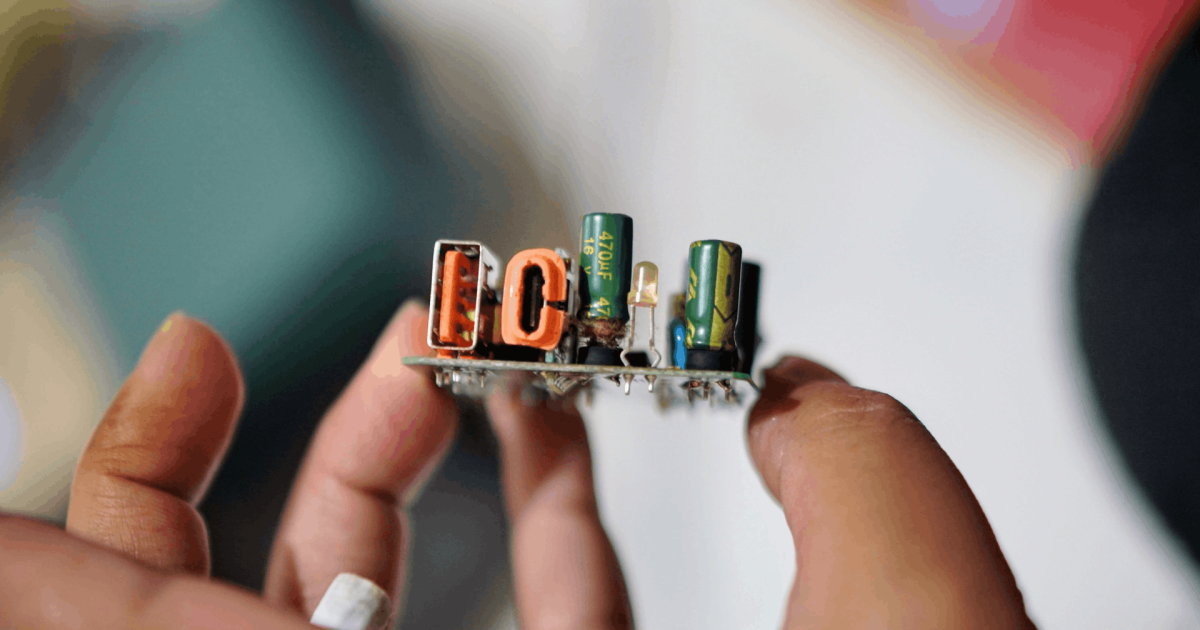


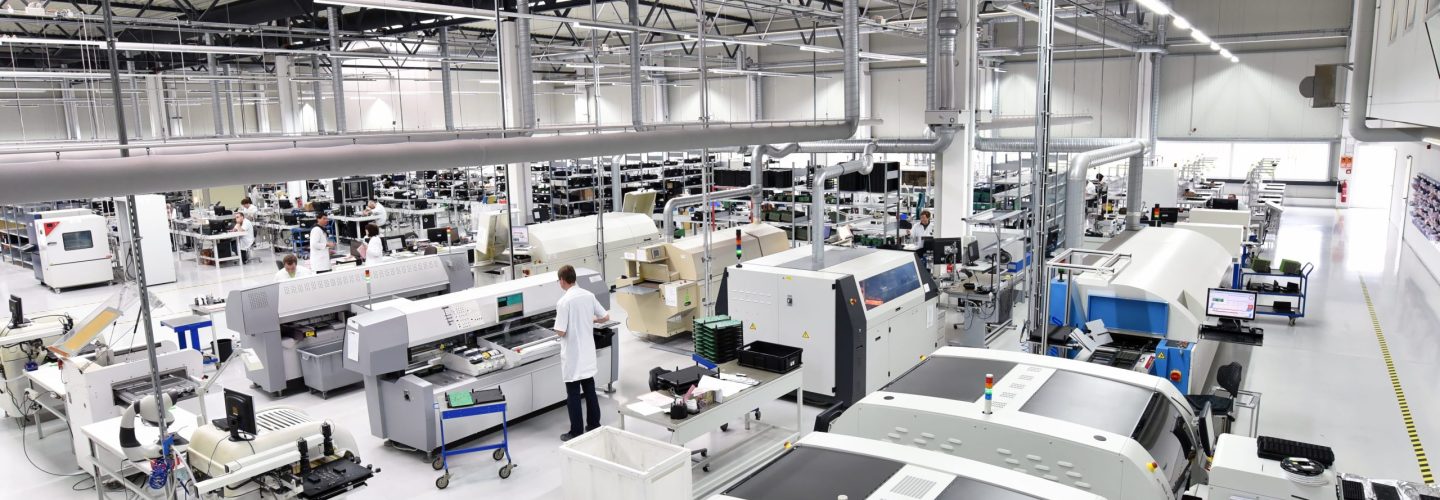
Box build assembly is the process of integrating PCBAs, cable harnesses, mechanical enclosures, and sub-assemblies into a finished, testable product unit [a2zems.com]. For UK industrial OEMs evaluating a contract electronics manufacturer UK-side or offshore, the per-unit economics of box build are rarely what they appear on a first quotation. The true cost depends heavily on how many of those layers the manufacturer controls internally, and where handoffs between suppliers introduce margin, delay, and quality risk.
TL;DR
- Box build cost is not just PCBA + labor. It includes cable assembly, enclosure, test, integration, and the coordination overhead between each layer [wiringo.com].
- Vertical integration collapses supplier handoffs, which typically reduces per-unit cost as volume scales but requires upfront manufacturing depth that not every EMS provider carries.
- For UK industrial OEMs, the make-vs-buy decision at each sub-assembly layer is where most cost is either recovered or lost.
- DFX disciplines applied early (DFM, DFA, DFT) have a measurable impact on box build yield and unit economics – more so than in standalone PCBA work.
- Choosing a partner with in-house PCBA, cable, and mechanical capability changes the risk profile of the entire program, not just the unit price.
About the Author: Season Group has operated as a design and manufacturing partner with 50+ years of experience (since 1975) building industrial electronics, from bare-board PCBA through to complete box build programs across a multi-site manufacturing network in the UK, Mexico, Malaysia, and China.
What does box build assembly actually include, and why does it matter for cost modeling?
Box build assembly covers everything beyond the bare PCBA: wire harnesses, cable routing, mechanical enclosure, front-panel interfaces, thermal management, potting, labeling, and functional test [resources.pcb.cadence.com]. Each of those elements carries its own bill of materials, labor input, and quality gate.
The reason this matters for cost modeling is that most initial quotations segment these elements into line items that obscure the total cost of integration. A PCBA quoted at a competitive rate may still result in a high per-unit cost once cable assembly, enclosure fit-up, and test labor are sourced separately – each from a different supplier, each adding margin and lead time [macrofab.com].
For industrial OEMs specifically, the complexity compounds quickly. Industrial builds often involve:
- Shielded or waterproof cable assemblies with over-molded connectors
- Enclosures requiring controlled torque, gasket seating, or IP-rated sealing
- Functional test that spans multiple sub-assemblies simultaneously
- Regulatory markings and traceability requirements applied during final build
Each of these steps represents a process hand-off if the manufacturer does not own the capability internally.
How does vertical integration change the per-unit economics at scale?
The cost of managing supplier interfaces is real and often underweighted. When PCBA, cable assembly, and final integration sit in separate facilities, the OEM or the EMS provider absorbs coordination costs: incoming inspection at each transfer point, packaging and freight between sites, rework liability disputes, and scheduling buffers to account for inter-supplier lead time variation [wiringo.com].
Vertical integration removes those interfaces. When the manufacturer runs SMT lines, wire harness assembly, and box build integration under the same roof or within a tightly controlled network, the per-unit cost curve behaves differently as volume increases:
| Cost Element | Multi-Supplier Model | Vertically Integrated |
|---|---|---|
| Incoming inspection per sub-assembly | Repeated at each handoff | Single point, internal |
| Inter-site freight and packaging | Per transfer | Eliminated or minimized |
| Rework ownership | Disputed between suppliers | Contained internally |
| Scheduling buffer | Stacked across suppliers | Managed as one program |
| Volume leverage on labor | Split across vendors | Consolidated |
The consolidated model does not automatically mean lower cost at low volumes. Setup amortization, tooling, and minimum run quantities still apply [macrofab.com]. But as annual volumes grow, the integrated model typically yields better unit economics because the coordination overhead that was previously variable becomes fixed or disappears entirely.
Where does DFX discipline have the highest leverage in a box build program?
Process control under one roof is only part of the picture. Whether the design itself is structured to be built efficiently at scale becomes the practical next consideration.
DFX disciplines – DFM, DFA, and DFT – have disproportionate impact in box build programs compared to standalone PCBA work. The reason is scope: a PCBA DFM review optimizes one board; a box build DFM review optimizes how every sub-assembly fits, fastens, routes, and tests as a system.
Key DFX interventions with measurable cost impact in box build:
- DFM (Design for Manufacturability): Identifies enclosure tolerances that will cause fit-up failures at rate, cable routing paths that require manual correction, and connector orientations that slow line-side assembly.
- DFA (Design for Assembly): Reduces the number of unique fasteners, standardizes connector families across sub-assemblies, and sequences the build so that no step requires disassembling a prior step to access a feature.
- DFT (Design for Test): Ensures that functional test coverage is achievable without specialized fixturing that adds cost and lead time. In box build, this often means planning test access points before the enclosure design is finalized.
Running these reviews after the design is frozen – which is common when OEMs engage a manufacturer late – forfeits most of the yield and cost benefit [wiringo.com]. The DFX value is front-loaded.
What are the practical trade-offs between near-shore and offshore box build for UK industrial OEMs?
Unit cost is not the only variable. UK industrial OEMs choosing between domestic, near-shore, and offshore box build need to account for total landed cost, lead time risk, and program management overhead [a2zems.com].
Offshore, high-volume facilities can offer lower per-unit cost on mature, stable designs where tooling is amortized and volumes justify the freight and duty overhead. The trade-off is lead time: ocean freight adds weeks, and any mid-program engineering change order carries delay and potential rework cost on in-transit inventory.
Near-shore or domestic builds cost more per unit at equivalent volumes but offer faster iteration, easier audit access, and lower exposure to currency and logistics disruption. For industrial programs with lower annual volumes, frequent revisions, or regulatory requirements that benefit from proximity – CE marking, UKCA alignment, or customer-specified audit rights – the premium is often justified.
The practical answer for most UK OEMs is not one or the other, but a structured decision at NPI: where does this product reach stable production, and at what volume does the offshore economics justify the transfer? A manufacturer with standardized processes across multiple regions can execute that transfer within a single partner relationship without the re-qualification overhead typical of moving between separate suppliers.
Season Group and Box Build for Industrial OEMs
Season Group has managed box build programs across industrial, power, and access security applications with 50+ years of experience (since 1975), operating as a design and manufacturing partner rather than a component-level subcontractor. The manufacturing network spanning the UK, Mexico, Malaysia, and China means that volume transfer decisions – near-shore NPI to high-volume offshore production – can be executed within a single partner relationship, with process standardization that avoids the re-qualification overhead typical of moving between separate suppliers. DFX is embedded at the NPI stage rather than applied as a downstream corrective, which is where most of the per-unit cost leverage in box build actually sits.
Frequently Asked Questions
What is included in a box build assembly quote?
A complete box build quote should cover PCBA, cable and harness assembly, mechanical enclosure, integration labor, test (ICT, functional, or end-of-line), labeling, and packaging. Quotes that itemize only PCBA and final assembly labor often exclude significant cost elements [a2zems.com].
At what volume does vertical integration improve box build unit economics?
This varies by program complexity, but the coordination cost savings from removing supplier handoffs typically become visible in the low thousands of units per year. At higher volumes, the labor and logistics consolidation effects compound further [wiringo.com].
How does DFT planning affect box build cost?
DFT planned before enclosure design is finalized allows test access points to be built into the product, avoiding specialized fixturing or partial disassembly for test coverage. Late DFT review often results in expensive workarounds or reduced test coverage [wiringo.com].
What is the cost impact of an engineering change order mid-production in offshore box build?
The cost includes rework or scrap on in-transit and finished inventory, re-test, updated documentation, and potential re-qualification. For low-to-mid volume industrial programs, a single significant ECO on an offshore program can eliminate several months of per-unit savings.
How should UK OEMs approach the NPI-to-volume transfer decision?
Define the criteria at program start: target annual volume, acceptable lead time, revision frequency, and regulatory audit requirements. Design the NPI build for the production site, not just for prototype validation. Manufacturers with standardized processes across regions can execute the transfer with less disruption [wiringo.com].W
Can a single EMS partner handle both NPI and high-volume box build?
Yes, if the partner has both quick-turn NPI capability and high-volume production infrastructure. The key is whether processes are standardized across both environments so that NPI learnings transfer directly to production without re-validation [macrofab.com].
About Season Group
Season Group is a design and manufacturing partner with 50+ years of experience (since 1975) in electronics manufacturing, operating production sites across the UK, Mexico, Malaysia, and China. The company works with industrial OEMs from early-stage DFX through to scaled box build production and full lifecycle support, including cable assembly, plastic injection molding, and supply chain management within an integrated manufacturing model. For UK-based OEMs evaluating box build programs – whether at NPI stage or considering a volume transfer – Season Group offers the process depth and multi-site structure to support both ends of that decision. Visit https://www.seasongroup.com or reach out at inquiry@seasongroup.com to talk through your requirements with our team.