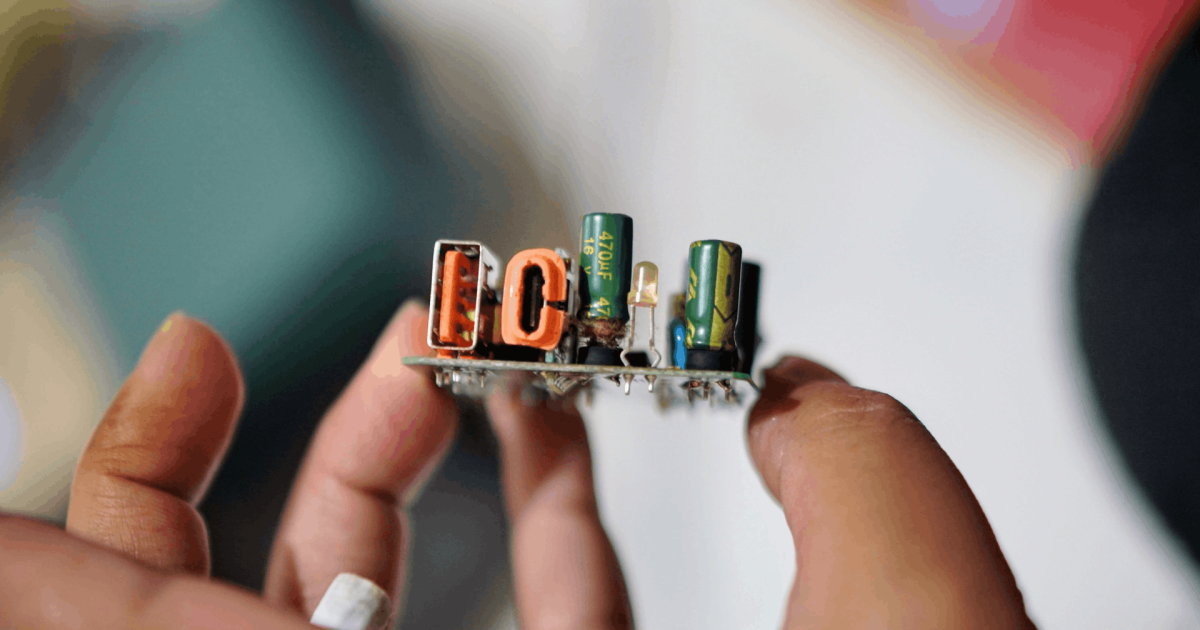



Adding cloud connectivity to an existing industrial product does not require a ground-up redesign. The practical path forward is to identify what the existing hardware already does well, constrain the new functionality to a defined interface boundary, and treat the integration as a manufacturing and production problem from day one. UK OEMs who approach this as a pure software or module-selection exercise typically run into DFX and production issues late in the program, when changes are most expensive to absorb.
TL;DR
- Cloud connectivity can be added to existing industrial products through defined interface boundaries, without redesigning the core hardware.
- The most common failure point is not the wireless module itself, but the DFM and DFT decisions that surround it.
- Antenna placement, power budget, and firmware update paths need to be resolved at the design stage, not during production validation.
- Retrofitting connectivity changes the supply chain profile of the product, including new component qualifications and potential certification re-runs.
- A phased NPI handoff, not a parallel fast-track, is what keeps yield stable when a connected variant enters the line alongside an existing build.
About the Author: Season Group is a design and manufacturing partner with 50+ years of electronics manufacturing experience. The team has practical experience integrating connectivity into existing industrial products across sectors including power, access security, and industrial automation equipment.
Why do UK OEMs struggle to add connectivity to mature products?
The core tension is straightforward: mature industrial products were designed around deterministic, closed-loop behavior. Adding connectivity introduces variable-latency communication, new power draw profiles, and firmware dependencies that the original architecture never accounted for. The product was not wrong; it was complete for a different set of requirements.
The commercial pressure to retrofit rather than redesign is real and legitimate. A mature product has validated tooling, a stable supply chain, and a known production yield. Throwing that away to add a new module is rarely justified. The question is not whether to retrofit, but how to constrain the retrofit so it does not destabilize what already works.
The most common mistake UK OEMs make is treating new connectivity as a feature to be bolted on after the design is otherwise frozen. At that point, antenna placement competes with existing board real estate, the power supply may not have headroom for the new subsystem, and there is no defined test point strategy for functional validation of the new interface. Each of these issues is solvable early and expensive late.
What is the right approach to defining the interface boundary?
Get the constraint wrong and the retrofit touches more of the original board than planned. The cleanest retrofit approach treats the connectivity addition as a discrete functional block with a defined electrical interface to the host system, typically UART, SPI, or a managed Ethernet port depending on data throughput requirements. This isolates the new subsystem from the validated analog and power sections of the original design.
Practically, this means:
- Choose the interface protocol before selecting the module. The module selection should follow from what the host hardware can already support, not the other way around.
- Define the power budget for the new subsystem independently. Inrush current during cellular registration is a known issue that can cause brownouts if the original PSU was sized with no margin.
- Establish a test point strategy for the new interface before layout begins. DFT decisions made at schematic stage cost nothing. Added post-layout, they often require a board spin.
- Confirm regulatory impact early. Adding a radio to a CE-marked product in most cases triggers a reassessment. This is not a reason to avoid the retrofit; it is a scheduling constraint that needs to be in the NPI plan from the start [blogs.sw.siemens.com].
The interface boundary also defines the firmware boundary. An OEM that keeps the new subsystem firmware separate from the host application firmware retains the ability to update the connectivity stack independently, which matters significantly for products that will be in the field for 5 to 10 years [glean.com].
How does the new subsystem change DFX and production process?
Settling the interface boundary answers the design question. The production question is different and starts with how the new variant enters the manufacturing line.
DFX for a connectivity retrofit covers more ground than a standard board change:
- DFM: Module footprint tolerances, castellated edges if using a module-on-module approach, and keep-out zones around the antenna all need to be reviewed against the capability of the production line. A 0.4mm pitch module placed near an existing connector requires explicit clearance confirmation.
- DFA: If the connected variant shares a panel with the original product, panelization and fiducial placement need to accommodate both. Running mixed panels without reviewing this creates downstream AOI and selective solder issues.
- DFT: The new subsystem needs functional test coverage at ICT or functional test stage. Testing that the module enumerates correctly is not sufficient; the test strategy should confirm the radio link at a known RF level, which requires a controlled RF environment on the line or a calibrated cable connection [aveva.com].
The supply chain impact is also real. A pre-certified module simplifies the regulatory path but introduces a new supplier, a new component with its own lifecycle, and in some cases a minimum order quantity that does not align with the existing product’s build volume. These are sourcing decisions that need to be made alongside the engineering decisions, not after them.
What does a phased NPI handoff look like for a connected product variant?
Getting the design right only holds if the NPI handoff is structured to protect yield on the existing build while the connected variant is being validated.
Introducing the connected variant in parallel with a standard production run in an attempt to save time creates line management complexity: variant-specific setup changes affect the existing build, test programs need separate management, and any yield issue on the new variant gets attributed to the line rather than the design. A phased handoff is more reliable:
- Prototype build at low volume, separate from the production line. This is where DFM issues surface without affecting production yield metrics.
- Engineering validation with a focus on the new interface. Power cycling, thermal soak, and RF performance under load should all be confirmed before the build moves to pilot.
- Pilot production on the standard line, with the connected variant clearly flagged in the routing and test program. No mixed-variant panels at this stage.
- Yield review before ramp. If first-pass yield on the pilot is below the established threshold for the existing product, the root cause needs to be resolved before volume production starts.
This sequence adds time upfront. It consistently saves more time than it costs by preventing escapes from reaching functional test or, worse, the field [blogs.sw.siemens.com].
How Season Group approaches product retrofits
Season Group’s position as a design and manufacturing partner means the engineering and production decisions described above are handled within the same team rather than across separate vendors. With 50+ years of electronics manufacturing experience, the team can assess an existing product’s architecture, define a feasible interface, work through the DFX implications, and carry the validated design through NPI into production across manufacturing sites in the UK, Mexico, Malaysia, or China. For UK OEMs extending an established product, that integrated model reduces the handoff risk that typically causes schedule slippage between design sign-off and production readiness.
Frequently Asked Questions
Does adding a wireless module always require a new CE marking assessment?
In most cases, yes. Adding a radio to a CE-marked product introduces a new radio emissions and immunity scope. The extent of reassessment depends on whether the original product had any radio components and which directives apply. Budget for this in the program schedule, not as a contingency.
Can the new subsystem share power with the existing product, or does it need its own regulator?
It depends on the margin available in the existing PSU and the peak draw of the new subsystem during transmission. Cellular modules in particular have sharp inrush profiles. Sharing is possible if the margin exists; otherwise, a dedicated LDO or DC-DC stage for the new subsystem is the lower-risk choice.
How do OTA firmware updates work for a retrofitted connectivity subsystem?
The firmware update path should be defined at the design stage. If the new subsystem firmware is separate from the host application firmware, updates can be pushed to the radio stack independently without requiring access to the host processor. This is the preferred architecture for products with long field lives.
What production test is needed for a new module on the line?
At minimum, functional confirmation that the module is enumerated correctly and can establish a data link. For regulated products, an RF performance check at a known power level is also required. The test strategy should be confirmed before pilot production, not developed during it.
What is the most common DFM issue encountered when adding a new module to an existing layout?
Antenna keep-out zone violations are the most frequently seen issue. The module manufacturer specifies a ground-free zone around the antenna; on a mature board with high component density, this zone often conflicts with existing copper or components. It needs to be confirmed in the original layout review, not found during proto.
How does a connected variant affect the existing product’s supply chain?
It adds at least one new critical component, a new supplier relationship, and potentially new certification dependencies. If the module has a different lifecycle than the rest of the BOM, EOL risk needs to be tracked separately from the start.
Is it better to use a pre-certified module or design a custom RF front end?
For most industrial retrofit applications, a pre-certified module is the practical choice. It reduces the regulatory burden, shortens the design cycle, and transfers some of the RF compliance responsibility to the module vendor. A custom RF front end is warranted only when the module form factor, performance envelope, or cost structure cannot be made to work within the product constraints.
About Season Group
Season Group is a design and manufacturing partner with 50+ years of electronics manufacturing experience, operating production sites in China, Malaysia, Mexico, and the UK. The company provides integrated design engineering, PCBA and full box build production, and connectivity capabilities, supporting industrial OEMs from early concept through full product lifecycle. For teams working through a product retrofit or a connected product NPI, reach out to the team at inquiry@seasongroup.com to talk through the specifics of your build.