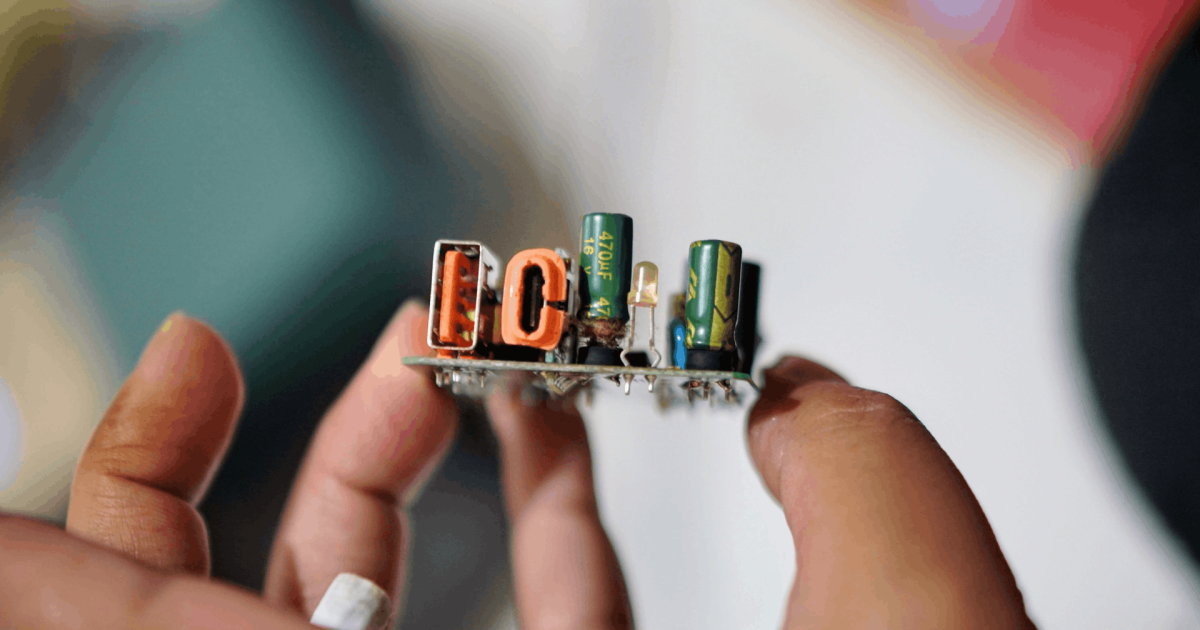



Field return data is one of the most underused inputs in component sourcing. When a product comes back from the field, the failure data it carries can tell you which components underperformed, which suppliers shipped marginal parts, and where your BOM assumptions were wrong. Most manufacturers treat returns as a warranty cost problem. The ones who close the loop treat them as a sourcing intelligence problem, and they go into the next production run with fundamentally better decisions than teams who rely on approved vendor lists alone.
TL;DR
- Field returns contain failure data that directly implicates specific components, suppliers, and BOM decisions, but this data rarely reaches procurement before the next build.
- Closing the feedback loop between repair/failure analysis and sourcing requires a structured process, not just goodwill between departments.
- The most actionable step is tagging failures to BOM line items and supplier lot codes, not just to product SKUs.
- Supply chain risk mitigation improves meaningfully when sourcing decisions are driven by observed field performance, not just qualification test results.
- The feedback loop also surfaces obsolescence risk and counterfeit exposure earlier than audit cycles typically would.
About the Author: Season Group is a design and manufacturing partner with 50+ years of experience managing electronics production across industrial, automotive, and access security sectors. Their lifecycle and supply chain management practice includes failure analysis, reverse logistics, and supplier quality engineering, giving them a direct operational view into how field return data connects to upstream sourcing decisions.
Why do most manufacturers fail to connect field returns to sourcing?
The failure is structural, not intentional. Repair and refurbishment operations typically sit in a service or aftermarket function, while component sourcing sits in procurement or supply chain. The data generated at the repair bench, such as failed component identifiers, lot codes, and root cause codes, is rarely formatted in a way that procurement systems can ingest or act on [resources.altium.com].
The result is that procurement teams continue to re-order from the same suppliers using the same approved vendor list, without any signal that a particular manufacturer’s date codes are trending toward early failure. The cost shows up as warranty spend, not as a sourcing decision consequence. This separation is the core problem.
What data from a field return is actually useful for sourcing?
Not all return data carries sourcing signal. The useful subset is narrower than most teams expect:
- Failed component part number and manufacturer: Identifies which specific manufacturer’s version of a component is failing, not just the generic part.
- Supplier lot code or date code: Allows traceability back to a specific shipment or production batch from a named distributor or broker.
- Failure mode: Distinguishes between parametric drift, catastrophic failure, ESD damage, and mechanical fatigue. Only some of these implicate the component manufacturer.
- Time-to-failure in the field: A component failing at six months versus three years points to different root causes. Early failures often indicate incoming quality escapes; late failures often indicate specification margin issues.
- Assembly site and line: Cross-referencing failures by production site can separate a component quality issue from a process issue introduced during assembly.
When this data is structured and tagged to BOM line items rather than just product serial numbers, procurement has a defensible basis for challenging an approved vendor, requesting requalification, or shifting allocation [lightsource.ai].
How should the feedback loop be structured operationally?
Building on the data types above, the harder question is who owns the process of getting that data into sourcing decisions before the next build.
A practical structure looks like this:
- Repair coding at the bench: Technicians assign a failure code that includes component reference designator, part number, and manufacturer. This must be mandatory, not optional, and the coding taxonomy must match the BOM structure used in procurement [tryleverage.ai].
- Lot code capture during incoming inspection: If lot codes are not recorded at goods receipt, field failures cannot be traced back to supplier shipments. This step is upstream of returns but enables everything downstream.
- Periodic failure review with sourcing: A monthly or pre-build review where failure analysis findings are translated into sourcing actions. This is not a warranty review; it is a supplier performance review with procurement authority to act.
- BOM annotation: High-failure components get flagged in the BOM with a sourcing note, triggering additional incoming inspection, alternate source qualification, or supplier discussion before the next production run [elisaindustriq.com].
- Supplier feedback: Where failures are attributable to a specific supplier lot, the supplier receives a formal quality notification. Their response (or lack of one) informs future allocation decisions.
How does this process support supply chain risk mitigation?
A related but distinct question is how individual component failure signals aggregate into broader supply chain risk mitigation strategy.
Field return data, when analyzed across multiple builds and product lines, surfaces patterns that isolated incoming inspection would not catch. A distributor repeatedly shipping parts with marginal parametric performance across different products is a sourcing risk, not just a quality event. A component manufacturer whose date codes from a specific production period show elevated failure rates may be experiencing process control issues that have not yet appeared in qualification data [levelsolutionsusa.com].
This kind of pattern recognition directly supports supply chain risk mitigation by:
- Identifying suppliers whose real-world performance diverges from their datasheet or qualification results.
- Flagging components with narrowing availability from reliable manufacturers, which is often an early indicator of obsolescence pressure [simcona.com].
- Detecting counterfeit or substandard parts that entered through spot-buy or broker channels, which rarely fail qualification tests but fail in the field under thermal and electrical stress [levelsolutionsusa.com].
- Providing evidence to justify dual-sourcing or inventory buffer decisions based on observed risk rather than theoretical exposure.
What gets in the way of making this work at scale?
Now that the operational picture is clear, the practical constraint is execution consistency. The feedback loop breaks at predictable points:
| Breakpoint | Common Cause | Practical Fix |
|---|---|---|
| Repair data not captured | Technician workload, no mandatory fields | Enforce required fields at closure; link to ERP work order |
| Lot codes not recorded | Incoming inspection skips traceability step | Make lot code capture a hold point, not a recommendation |
| Data sits in service systems | No integration with procurement or ERP | Build a shared failure report template reviewed in sourcing meetings |
| Sourcing team doesn’t act | No formal trigger to update approved vendor list | Define a failure rate threshold that automatically initiates a supplier review [tryleverage.ai] |
| Supplier not informed | Relationship managed through commercial team only | Route quality notifications through supplier quality engineering, not sales contacts |
The most common failure is the third one: data exists somewhere in a service or CRM system but never reaches the people making sourcing decisions for the next run [resources.altium.com].
Connecting to Season Group’s Production Readiness
Season Group operates as a design and manufacturing partner across the full arc from NPI through aftermarket and warranty, which means failure analysis findings from the repair bench sit in the same operational context as BOM management and supplier quality engineering. With a manufacturing network spanning China, Malaysia, Mexico, and the UK, field return patterns can also be cross-referenced by production site, which helps separate process-driven defects from component-driven ones. The practical value is in making sure that what the field teaches about component performance actually reaches sourcing before the next build is committed, not after the next warranty cycle.
Frequently Asked Questions
Q: At what volume of returns does it make sense to build a formal feedback loop?
Even at low return volumes, structured failure coding costs little and builds a data foundation that becomes valuable at scale. The habit matters more than the volume.
Q: Who should own the feedback loop process?
Supplier quality engineering is the natural owner. They have the technical context from failure analysis and the procurement interface to translate findings into sourcing actions [tryleverage.ai].
Q: Can this process work without ERP integration?
Yes. A shared spreadsheet reviewed monthly in a sourcing meeting is sufficient to start. ERP integration improves efficiency but should not be a prerequisite.
Q: How do you distinguish a component quality issue from an assembly process issue?
Cross-reference failures by production site and assembly line. If the same component fails at one site but not another using the same BOM, the root cause is more likely process than component [elisaindustriq.com].
Q: What should trigger a supplier change versus a supplier warning?
A warning is appropriate for an isolated lot-specific event where the supplier responds with credible corrective action. A sourcing change is warranted when failures recur across multiple lots, the supplier is unresponsive, or the failure mode indicates a systemic quality control gap [levelsolutionsusa.com].
Q: How does this process interact with obsolescence management?
Repeat failures on aging components often signal the manufacturer is winding down the product line. Early detection through field data gives procurement lead time to qualify alternates before an EOL notice forces a crisis response [simcona.com].
Q: Does this apply differently for broker-sourced components versus authorized distribution?
Yes. Broker-sourced parts carry higher counterfeit risk and typically have weaker lot traceability. Field failures on broker-sourced parts should be escalated more aggressively and trigger a sourcing channel review, not just a supplier notification [levelsolutionsusa.com].
About Season Group
Season Group is a design and manufacturing partner with 50+ years of experience in electronics manufacturing since 1975, operating sites across China, Malaysia, Mexico, and the UK. Their lifecycle and supply chain management services cover failure analysis, reverse logistics, supplier quality engineering, and EOL crisis management, giving them a direct operational stake in how field performance data connects to sourcing and production decisions. With engineering capability spanning DFM, NPI, and full box build production, Season Group works with industrial OEMs, access security manufacturers, and power product companies that need continuity and reliability built into both the product and the supply chain behind it.
To talk through how field return data can be structured to inform your next sourcing review, visit https://www.seasongroup.com or reach out to inquiry@seasongroup.com to start a conversation with our team.