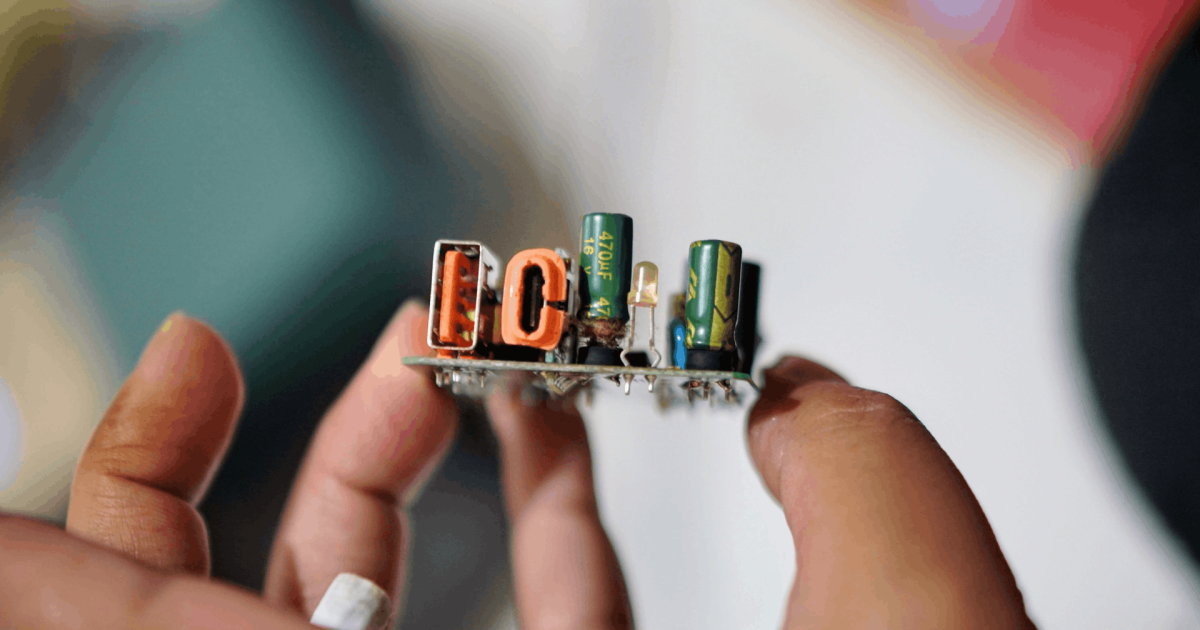



Package-on-Package (PoP) and advanced component stacking are not just board-level decisions. They are system-level commitments that ripple through every stage of production, from paste deposition to final inspection. When a layout engineer chooses PoP, they are effectively locking in a set of manufacturing constraints that an unprepared production partner will struggle to meet consistently at volume. Getting this right requires more than capable equipment. It requires a partner whose process knowledge is embedded early enough to shape the design before it becomes a manufacturing problem.
TL;DR
- PoP and advanced stacking reduce footprint but introduce compounding tolerance, thermal, and inspection challenges that most standard SMT lines are not configured to handle.
- DFM input at the layout stage is not optional. It directly determines yield, rework rates, and test coverage.
- X-ray and AXI (automated X-ray inspection) are non-negotiable for hidden joint verification in stacked configurations.
- Solder paste management for dual-sided or stacked packages demands tighter process control than conventional BGA work.
- Choosing a manufacturing partner without in-house PoP process experience adds risk at every stage from NPI through ramp.
About the Author: Season Group is a design and manufacturing partner with over 50 years of electronics manufacturing experience. Its production capabilities span BGA down to 0.4mm pitch, 01005 components, and PoP assembly across multi-site facilities in China, Malaysia, Mexico, and the UK, giving the team direct, repeated exposure to the process realities described in this article.
What Is Package-on-Package (PoP) and Why Does It Complicate Assembly?
PoP is a 3D integration method where two or more semiconductor packages are vertically interconnected, typically stacking memory directly on top of a logic device such as an application processor. The primary driver is board space reduction, particularly in compact consumer electronics, industrial controllers, and smart devices where real estate is a hard constraint.
The complication is not the concept. It is the stacking tolerance stack-up. Each package in the assembly carries its own dimensional variation. When stacked, those tolerances compound. The solder joints connecting the bottom and top packages occupy a confined vertical space, and any misregistration, paste volume inconsistency, or warpage during reflow can produce a defect that is mechanically invisible at the board surface.
Conventional SMT inspection tools cannot see into the interface between stacked packages. That alone changes what your production partner needs to bring to the table.
What Process Capabilities Does PoP Actually Require From Your EMS Partner?
This is where many engagements fall short. PoP is often treated as an extension of standard BGA assembly. It is not. The additional process demands include:
- Dual-flux or dip-flux capability: The top package solder balls must be fluxed before placement. Many lines use a solder paste dip process. Without the right dip tooling and paste rheology control, joint quality varies.
- Fine-pitch paste printing: Bottom package pads on PoP devices often run at pitches requiring stencil engineering beyond standard aperture rules. Mismatched aspect ratios cause bridging or insufficient fill.
- Controlled reflow profiling: Both packages must reflow together. Thermal mass differences between the bottom logic device and the top memory package can cause one to peak too early or too late. Profile validation is mandatory, not optional.
- Warpage management: Many PoP packages exhibit dynamic warpage during the reflow cycle. If your partner has not characterized the warpage behavior of your specific package combination, they are guessing at their process window.
How Does DFM Input Change the Outcome for Stacked Component Layouts?
Design for Manufacturability (DFM) for PoP is not about flagging problems after layout is complete. It is about shaping pad geometry, via placement, keepout zones, and underfill accessibility from the start.
Key DFM inputs that change downstream yield:
| DFM Factor | What Goes Wrong Without It |
|---|---|
| Pad size and copper balancing | Uneven solder joint volume, package tilt |
| Thermal relief via design | Inconsistent reflow across the stacked interface |
| Underfill keepout areas | Underfill bleed onto adjacent components |
| Stencil aperture engineering | Paste bridging or insufficient deposition |
| Test point placement | Zero functional test coverage on hidden nodes |
The table above represents repeatable failure modes, not theoretical risks. Each of these shows up as a yield problem in volume builds when the DFM stage is skipped or compressed.
A design and manufacturing partner with integrated DFM capability can front-load this review during concept and schematic phases, not just at Gerber submission. That timing difference is significant. Changes at layout cost days. Changes at NPI cost weeks. Changes after first build cost program schedules.
What Inspection Strategy Is Required for Advanced Stacking Configurations?
AOI (automated optical inspection) cannot inspect a hidden solder joint. For PoP and advanced stacking, the minimum credible inspection strategy includes:
- AXI (automated X-ray inspection) for high-volume builds requiring repeatable pass/fail criteria without manual interpretation. For lower-volume or NPI stages, manual X-ray with engineering review provides a baseline, though 2D projection alone has significant limitations for PoP and typically requires oblique views or 3D capability to reliably detect defects such as open soldering, cold joints, and insufficient solder paste.
- Cross-section analysis during NPI and first article stages to validate joint formation before committing to production volume.
Some configurations may also warrant 3D X-ray tomography when joint geometry makes 2D projection ambiguous. This is particularly relevant for multi-layer stacks or when underfill obscures the joint profile.
The practical implication: if your shortlisted manufacturing partner cannot describe their X-ray setup in specific terms for your package configuration, that is a qualification gap, not a minor detail.
What Are the Rework Implications of PoP Assembly?
Rework on PoP assemblies is a material risk that needs to be planned for before production, not after a yield excursion. The challenges:
- Removing a stacked package without damaging the bottom package or adjacent components requires dedicated IR or hot-air rework stations with precisely controlled nozzle geometry.
- Reballing a PoP device in the field is rarely practical. In most cases, rework involves full top-package removal and replacement.
- If underfill has been applied, rework becomes significantly more destructive. Underfill strategy must be defined before production, accounting for the likely rework rate at that build volume.
Planning rework capability upfront is part of responsible DFX (design for excellence) practice, not an afterthought.
Season Group and PoP Manufacturing
Season Group’s production infrastructure directly supports the demands described throughout this article, handling PoP, BGA to 0.4mm pitch, and 01005 component placement within automated SMT lines that include AOI and X-ray inspection as standard steps, not add-ons. The integrated DFM team engages from early concept stage through NPI, which means the Design for Excellence (DFX) analysis and stencil engineering decisions described above happen within the same organization managing the build. For programs moving from prototype to volume, that continuity reduces the translation risk that typically costs time and yield at ramp. As a design and manufacturing partner, Season Group’s value here goes beyond simple production capacity to ensuring engineering decisions made at layout are carried into repeatable production outcomes.
Frequently Asked Questions
What is the minimum pitch Season Group’s SMT lines support for PoP assembly?
Season Group’s lines are configured for BGA down to 0.4mm pitch, which covers the majority of current PoP package families.
Can PoP components be used in high-reliability or industrial builds, not just consumer electronics?
Yes. PoP is increasingly used in compact industrial controllers and smart devices. The thermal cycling and shock requirements for these applications change the underfill and inspection requirements but do not preclude PoP.
At what design stage should DFM review happen for a PoP-heavy board?
As early as schematic capture. Pad geometry, thermal strategy, and keepout planning set constraints that become expensive to change once layout progresses.
Is AXI inspection always required for PoP builds?
For low-volume NPI, manual X-ray with engineering review may be sufficient. For volume production, AXI provides the repeatability and documentation needed to sustain quality at scale.
What makes PoP rework different from standard BGA rework?
The stacked configuration means thermal energy applied to the top package also affects the bottom package and its solder joints. Equipment nozzle geometry and profile control requirements are more demanding than single-package BGA rework.
Does underfill affect repairability in all PoP configurations?
Yes. Any underfill application materially increases the difficulty and destructiveness of rework. This trade-off must be evaluated during DFX planning before production commitment.
About Season Group
Season Group is a global design and manufacturing partner with over 50 years of electronics manufacturing experience. Operating across facilities in China, Malaysia, Mexico, and the UK, the company supports programs from early-stage DFM and NPI through full-volume production and product lifecycle management. Its integrated approach connects engineering decisions directly to production outcomes, which is particularly relevant for complex assembly work such as PoP and advanced stacking where the gap between design intent and manufactured result is where programs succeed or fail.
If your next program involves PoP, fine-pitch stacking, or complex PCBA configurations, it is worth having a direct conversation about process capability before layout is locked. Visit https://www.seasongroup.com or email inquiry@seasongroup.com to talk through your requirements.